
Reviewed · 3-DAY EXPERIENCES
(3 Days) PADI Open Water Diver Course Kota Kinabalu
Start with the sea, then earn the card. This three-day PADI course gives you a clear path from classroom basics to supervised underwater practice around Sapi Island and the Tunku Abdul Rahman Marine Park. I like the small instructor groups, capped at four students per instructor, and I like that equipment, bottled water, and lunch are included. The main catch is the firm, non-refundable booking policy, so check your schedule and the weather before paying.
The course begins at an easy-to-find training center in central Kota Kinabalu and ends back there after the final exam. An English-speaking instructor guides you through the required skills, and one recent participant, Taichi, completed the official PADI Open Water certification in three days after careful instruction and repeated practice. That is encouraging, but this is still a serious course, not a casual island outing.
In This Review
- Key points to know before you book
- Why this three-day course works for beginners
- Day one: classroom training from 10:00 AM
- Day two: first practical session near Sapi Island
- Day three: final two sessions and the PADI exam
- Sapi Island and the Tunku Abdul Rahman Marine Park
- What the $437.93 price includes
- The practical details that can affect your day
- Who will get the most from this course?
- Should you book the Kota Kinabalu PADI course?
- FAQ
- How long is the PADI Open Water course?
- Where does the course begin?
- What time does the course start?
- What happens on the first day?
- Where do the practical sessions take place?
- How many underwater sessions are required?
- What is included in the price?
- Is transport or accommodation included?
- What happens after I complete the sessions?
Key points to know before you book
- Four required sea sessions: You complete Open Water Dives 1 and 2 on the second day, then Dives 3 and 4 on the third day.
- Maximum of four students per instructor: The small teaching ratio gives you more room to ask questions and repeat skills.
- Classroom day runs from 10:00 AM to 3:45 PM: You begin with theory in the training room before entering the water.
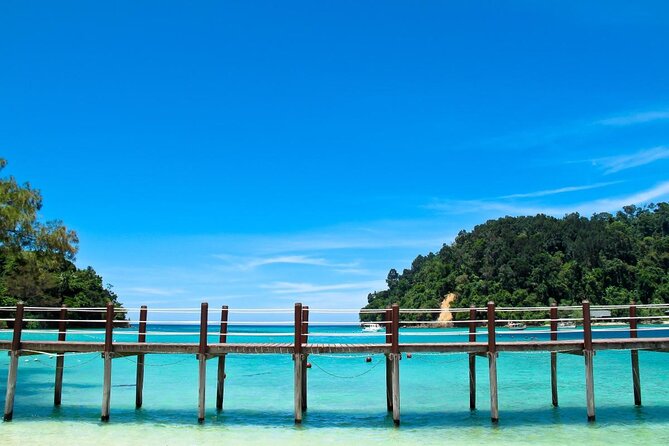
- Sapi Island is only about 15 minutes from the city jetty: The short boat ride keeps the course focused and limits wasted transfer time.
- Lunch is served fresh on the island: A la carte food is included each day, along with bottled drinking water.
- You leave with PADI certification if you pass: After completing the four required sessions and the final exam, your PADI Diver ID follows a few days later.
Why this three-day course works for beginners
I see the appeal right away. Learning to use scuba equipment can feel like a lot at first, especially when you are managing breathing, buoyancy, hand signals, and basic safety skills at the same time. A three-day format gives you a full classroom day before the practical work begins.
The first day is not a token briefing. You attend theory from 10:00 AM to 3:45 PM in the training room. That block gives you time to learn the book concepts and understand how the equipment and safety procedures fit together before you enter the water.
I also like the group limit. One instructor teaches no more than four students, which is a useful ratio for a beginner course. You are less likely to get lost in a crowd, and you have a better chance of getting direct help when a skill needs more practice.
The course is described as lasting about eight hours, but the training takes place across three days. Think of the eight-hour figure as an approximate activity duration rather than three full days of nonstop instruction. The first day alone runs nearly six hours, while the other two days include boat travel, practical training, surface breaks, and the final exam.
More Kota Kinabalu trips:
- 2D1N Mount Kinabalu Climbing
★ 5.0 · 494 reviews - Bongawan River Cruise: Proboscis Monkey & Fireflies Mangrove
★ 4.8 · 437 reviews - Guided Snorkeling Day Trip, Kota Kinabalu, Sabah, Malaysia
★ 5.0 · 282 reviews
Day one: classroom training from 10:00 AM
Your first appointment is at Go Aquatic, located at Lot G30 on the ground floor of Wisma Sabah, along Jalan Haji Saman in central Kota Kinabalu. The center is near public transportation, and the central location is practical if you are staying in the city.
The classroom session runs until 3:45 PM. This is where you work through the basic knowledge needed for the PADI Open Water course. You will need to pay attention here. The theory is not just paperwork before the enjoyable part. It covers the ideas that help you make sensible decisions underwater.
Lunch is listed as included each day, though the first day takes place in the training room. The provided details specifically describe fresh a la carte lunch at the island restaurant, so confirm the exact meal arrangement for the classroom day when you receive your booking information.
This is also the day to ask questions. If you are nervous about breathing through a regulator or concerned about removing and replacing equipment, say so early. The course is built around learning, not pretending you already know what you are doing.
Day two: first practical session near Sapi Island
On the second day, you move from theory to hands-on instruction. The first practical work takes place in a confined-water area near the beach in the Sapi Island area. The journey from the city-center jetty is normally about 15 minutes, so you reach the marine park without a long transfer.
That short ride is a real advantage. You spend less time sitting on a boat and more time focused on the course. It also makes the setting feel like a proper island outing rather than a training pool, while the near-beach area provides a controlled place to begin.
You complete Open Water Dive 1 and Open Water Dive 2 on this day. The instructor will teach and supervise the required skills, but you still need to take an active role. Listen carefully, follow directions, and speak up if a task feels unclear.
The small class size matters most here. With a maximum of four students per instructor, you should have time to receive corrections and repeat a skill when needed. Taichi specifically praised the English guide for being patient and for making sure the book concepts were practiced safely. That kind of patience is exactly what you want during the first underwater sessions.
Lunch is served at an island restaurant, cooked fresh and served fresh. It is a useful inclusion, since the combination of boat travel, physical activity, and concentration can leave you hungry. Bottled drinking water is also provided on the boat, with one 500-milliliter bottle specified.
Day three: final two sessions and the PADI exam
The third day completes the practical portion of the course. You carry out Open Water Dive 3 and Open Water Dive 4 with your instructor, then take the final exam.
The progression is sensible. By this point, you have already completed the first two sessions, so the final day lets you build on skills instead of starting from scratch. Still, do not assume the last two sessions will feel automatic. You must complete the required work and show that you can apply the safety and equipment knowledge taught in class.
After the four sessions, you sit the final exam. If you pass and have completed all required training, the instructor certifies you as a new PADI Open Water Diver. The PADI Diver ID, or license number, arrives after a few days.
This timing is important if you plan to continue underwater activities immediately after the course. You may finish the practical work and exam during the trip, but the physical or digital license information comes later. Keep that in mind if another operator asks to see your certification during the same holiday.
A completely different kind of day out:
- Bongawan Wetland: Proboscis Monkey and Fireflies Shared Tour
★ 4.2 · 137 reviews - Borneo (Klias) River Cruise & Fireflies Tour
★ 4.5 · 126 reviews - Sky-Mirror Photographing and Proboscis Monkey & Fireflies Watching River-Cruise
★ 4.0 · 109 reviews - Full-Day Guided Snorkeling Tour from Kota Kinabalu
★ 4.6 · 101 reviews
Sapi Island and the Tunku Abdul Rahman Marine Park
Sapi Island is the main practical setting described for the course. Its close position to Kota Kinabalu makes it a useful training location, particularly for first-time students who may not want a long boat journey on their first morning at sea.
The course also takes place around the Tunku Abdul Rahman Marine Park. You get the combination of structured instruction and an island setting, rather than spending all three days inside a classroom or pool.
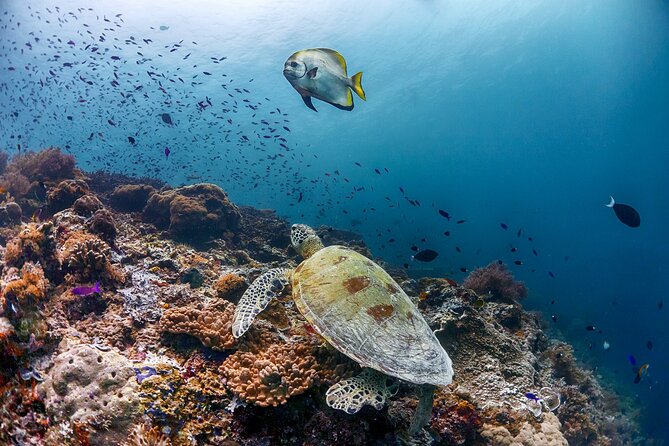
The exact reefs and underwater sights are not specified, so I would not book this expecting named marine animals or guaranteed visibility. Conditions can change, and the activity requires suitable weather. The value here is the training path and the chance to qualify in Kota Kinabalu, not a promise of a particular wildlife encounter.
Jesselton Point is part of the route and functions as the city-side transport point. The activity ends back at the meeting center, so you are not left finding your own way home from an island or a separate marina.
What the $437.93 price includes
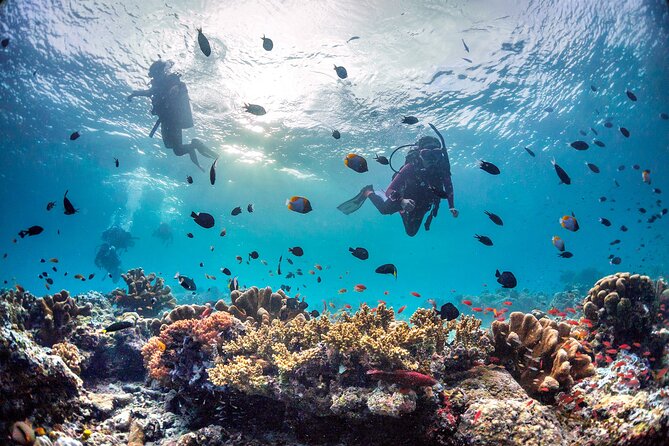
At $437.93 per person, this is not the cheapest way to spend three days in Sabah. Yet the cost covers more than an introductory boat trip. You receive the course instruction, use of scuba equipment, required fees and taxes, bottled water, and lunch on the island.
Equipment is a major part of the value. A first-time student usually does not own a full set of suitable gear, and arranging it separately can create extra costs and confusion. Having the equipment supplied keeps the booking simple.
The lunch inclusion also helps. Fresh island meals and drinking water remove two small but practical expenses from the day. You should still budget for anything not listed, including transport to the center, accommodation, and a dry towel.
The group format keeps the price lower than a private course may be. In exchange, you share the instructor’s attention with other students. The maximum overall group is 16 people, but the teaching group is limited to four students per instructor. That distinction matters. You may travel as part of a larger boat group while receiving instruction in a smaller unit.
I consider the price reasonable for someone who genuinely wants the PADI qualification. If you only want to try breathing underwater once, a shorter introductory session may make more financial sense. If you want a recognized entry-level certification, the included gear, instruction, meals, and four required sea sessions make the package easier to judge.
The practical details that can affect your day
You must make your own way to the meeting point. Pick-up and drop-off service is not included, and accommodation is also your responsibility. The center is near public transportation, which helps, but you should allow enough time to reach Wisma Sabah for the 10:00 AM start.
Bring or arrange a dry towel. It is specifically not included, and you will likely want one after boat transfers and time in the water. The supplied information does not list every personal item you may need, so ask the operator what clothing and personal supplies to bring before the first session.
The course is not recommended for children under 10. Most people can participate, but the training still requires you to follow instructions and manage practical equipment in the water. If you have concerns about your fitness or ability to take part, contact Go Aquatic before booking.
Confirmation arrives within 48 hours, subject to availability. The course is often booked about 26 days ahead, which suggests you should not leave it until the last moment if your Kota Kinabalu dates are fixed.
Weather is the biggest outside factor. If poor conditions force cancellation, you are offered another date or a full refund. Otherwise, the booking is non-refundable and cannot be changed for any reason. That is a harsh rule, so I would only reserve once your travel plans are firm.
Who will get the most from this course?
This course suits you if you want a recognized PADI qualification and prefer a compact three-day schedule. It is especially useful if you are already based in Kota Kinabalu and want a central meeting point, short boat access, supplied equipment, and meals included.
It also suits beginners who value patient instruction. Taichi’s experience is helpful here: the English guide focused not just on passing skills but also on practicing the book concepts safely. You want that kind of attention when you are learning something that depends on calm, careful habits.
I would be more cautious if you dislike fixed schedules or need flexible cancellation terms. The course has set training days, a long classroom session, four required practical sessions, and an exam. Missing a day could disrupt the entire certification plan.
This is also not the best choice if your main goal is a relaxed island day with a little underwater sightseeing. The qualification comes first. The marine park setting is a benefit, but the schedule is built around instruction and assessment.
Should you book the Kota Kinabalu PADI course?
I would book this course if you want to qualify, can commit three days, and are comfortable with the non-refundable terms. The small instructor groups, central meeting point, supplied equipment, fresh island lunch, and short ride to Sapi Island create a practical package for beginners.
I would skip it if you only want a quick introduction or if your schedule is uncertain. For everyone else, the strongest reason to choose it is the balance between structured training and a real island setting. You receive four practical sessions, a final exam, and PADI certification if you meet the requirements. That is a useful qualification to earn during a Kota Kinabalu stay, provided you give the course the time and attention it deserves.
FAQ
How long is the PADI Open Water course?
The course takes place over three days. The approximate activity duration is listed as eight hours, while the first classroom day runs from 10:00 AM to 3:45 PM.
Where does the course begin?
You meet at Go Aquatic, Lot G30, Ground Floor, Wisma Sabah, Jalan Haji Saman, Pusat Bandar Kota Kinabalu, 88000 Kota Kinabalu, Sabah, Malaysia.
What time does the course start?
The listed start time is 10:00 AM.
What happens on the first day?
You attend theory class in the training room from 10:00 AM to 3:45 PM.
Where do the practical sessions take place?
The hands-on sessions begin in a confined-water area near the beach in the Sapi Island area, within the Tunku Abdul Rahman Marine Park.
How many underwater sessions are required?
You complete two sessions on the second day, Open Water Dives 1 and 2, followed by two more on the third day, Open Water Dives 3 and 4.
What is included in the price?
The price includes lunch, scuba equipment, all fees and taxes, and a 500-milliliter bottle of drinking water on the boat during the activity.
Is transport or accommodation included?
No. Pick-up and drop-off, accommodation, and a dry towel are not included.
What happens after I complete the sessions?
You take a final exam. If you pass and complete all required sessions, your instructor certifies you as a PADI Open Water Diver. Your PADI Diver ID or license number arrives after a few days.
Just added in Kota Kinabalu
- Island Hopping ( Manukan & Sapi Island ) From Kota Kinabalu★ 4.5 · 9 reviews
- Sepanggar Island Luxury Boat★ 5.0 · 1 review
- Zen & Splash: Stand-Up Paddleboard (SUP) Yoga in Tanjung Aru★ 5.0 · 1 review
- Discover Sailing Experience in Tanjung Aru Beach★ 3.0 · 1 review
- Join us for a RAID Try Dive in Kota Kinabalu★ 5.0 · 27 reviews
- Mangrove Kayaking Experience in Borneo★ 5.0 · 8 reviews
- Monsopiad Cultural Village Visit with Private Transfer from Kota Kinabalu★ 4.5 · 5 reviews
- Stand Up Paddle Boarding with Sunrise/Sunset Tour at Kota Kinabalu with transfer★ 3.0 · 1 review
3-Day Experiences, compared.

Borneo Wildlife Tour 3 Days 2 Nights At Tanjung Bulat Jungle Camp Kinabatangan
Read our review →
3 Days 2 Nights Unesco World Heritage Mulu 4 Showcaves
Read our review →
Cameron Highlands 3 Days 2 Night Tours Private (per Vehicle)
Read our review →
Mulu Headhunter’s Trail – 3 Days Trekking & Cultural Experience
Read our review →Browse the lists this tour appears in