
Reviewed · HALF-DAY
Half-Day Mari Mari Cultural Village from Kota Kinabalu
Borneo’s cultures come alive beyond Kota Kinabalu. This four-hour visit to Mari Mari Cultural Village introduces you to five Sabah communities through longhouses, food, craft demonstrations, and a live dance show. I like the way the tour combines practical details, such as fire starting and blowpipe making, with stories about farming, hunting, seafaring, and family life.
I also like the simple logistics: hotel pickup and drop-off, a small maximum group of 15, and food included according to your departure time. The main consideration is that this is a cultural museum rather than a visit to an ordinary working village, so the presentation has a planned, visitor-friendly format.
In This Review
- Key points to know before you go
- Why Mari Mari works well as a first look at Sabah
- The ride from Kota Kinabalu and the four-hour schedule
- Entering Mari Mari Cultural Village
- The Dusun section and Sabah’s paddy traditions
- The Rungus longhouse and communal living
- The Lundayeh section, farming, animals, and preserved food
- The Bajau presentation and Sabah’s connection to the sea
- The Murut stop and the meaning behind the demonstrations
- Bamboo cooking, samples, and the food schedule
- The dance performance and the tour’s overall rhythm
- Is $90 a fair price?
- Who should book this experience?
- Booking details worth keeping in mind
- Should you book Mari Mari Cultural Village?
- FAQ
- How long does the Mari Mari Cultural Village tour last?
- Is hotel pickup and drop-off included?
- What cultures are presented at the village?
- What demonstrations are included?
- Is food included?
- What transport is used?
- What are the start times for cruise passengers?
- What is the cancellation policy?
Key points to know before you go
- Five Sabah cultures in one visit: Learn about the Dusun, Rungus, Lundayeh, Bajau, and Murut peoples.
- Demonstrations make the history practical: See blowpipe making, fire starting, tattooing, bamboo cooking, and other traditional practices.
- Food is part of the program: The 9 am session includes a buffet lunch, while the 1 pm session includes afternoon tea.
- Transport is arranged from Kota Kinabalu: You ride in an air-conditioned minivan for groups of six or more, or an Innova for five or fewer.
- The tour suits port visitors: Cruise passengers have separate start times, at 10 am in the morning and 2 pm in the afternoon.
- Book ahead for a small group: The tour accepts no more than 15 people and is booked about 18 days ahead on average.
Why Mari Mari works well as a first look at Sabah
Sabah is home to many cultural groups, and it is not easy to understand their differences during a short stay in Kota Kinabalu. Mari Mari Cultural Village gives you a compact introduction in one countryside setting, without requiring separate trips across the state.
The five communities presented here have different traditions and environments. The Dusun are associated with paddy cultivation. The Rungus are known for their longhouse homes. The Lundayeh traditionally farm, raise animals, hunt, and fish. The Bajau have strong links to the sea, while the Murut were hill farmers who also relied on blowpipe hunting and fishing.
That range is the real value of the visit. Instead of seeing a single version of Sabah culture, you get a basic comparison of how people adapted to farms, forests, rivers, and the coast.
The village is an open-air museum located away from the city. Its purpose is to preserve and explain ethnic traditions, so you can expect a structured route through traditional buildings and activity areas. The format is easier to follow than trying to piece together cultural information on your own, especially if you have only a few days in Kota Kinabalu.
I would treat it as an introduction, not the final word on Sabah’s cultures. Four hours gives you a useful foundation, but it cannot explain every regional difference or modern change in detail.
More Kota Kinabalu trips:
- 2D1N Mount Kinabalu Climbing
★ 5.0 · 494 reviews - Bongawan River Cruise: Proboscis Monkey & Fireflies Mangrove
★ 4.8 · 437 reviews - Guided Snorkeling Day Trip, Kota Kinabalu, Sabah, Malaysia
★ 5.0 · 282 reviews
The ride from Kota Kinabalu and the four-hour schedule
Pickup and drop-off are included from Kota Kinabalu hotels, which removes one of the annoying parts of arranging a countryside visit. Transport is by air-conditioned minivan when the group has six or more people. Groups of five or fewer use an Innova.
The maximum group size is 15. That is small enough to make the guide’s explanations easier to hear, though the actual feel of the trip will depend on how many people book your departure.
The standard duration is about four hours. The supplied schedule gives roughly 20 minutes to each cultural section, with the main village visit listed first. That makes the pace fairly brisk. You will have enough time to see and listen, but this is not a slow photographic walk where you can linger at every building.
There are two practical departure patterns:
- The 9 am session includes a buffet lunch.
- The 1 pm session includes afternoon tea.
If you are arriving by cruise ship, take special care with the timing. The morning session begins at 10 am, and the afternoon session begins at 2 pm. Port visitors should also tell the driver about their limited time. One short-port visit was adjusted when the driver explained the schedule to village staff, who arranged a shorter experience. That kind of flexibility may help, but you should not count on seeing the full program if your ship’s schedule is tight.
Entering Mari Mari Cultural Village
The first stop introduces the village and explains its role as a museum dedicated to Borneo’s ethnic cultures. You will move through traditional-style homes and activity areas rather than simply walking around a collection of buildings with no explanation.
The setting away from central Kota Kinabalu helps. You leave the city behind and see why building methods, farming, food storage, and transport developed differently in inland and coastal Sabah.
The visit is designed around demonstrations and explanation. That matters because a house can look attractive while telling you very little on its own. Here, the guide and local presentations connect the structures with daily routines and beliefs.
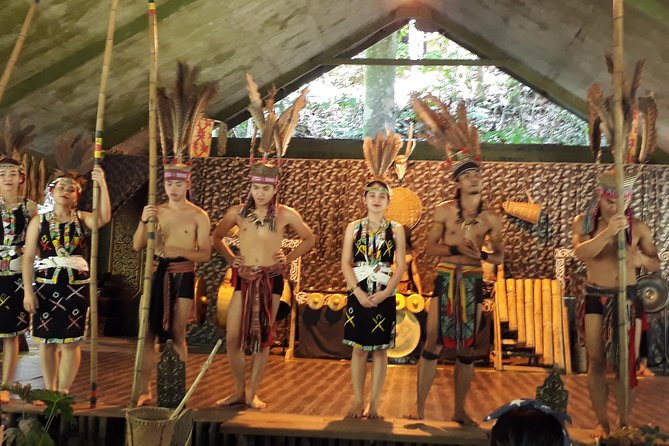
The tour also includes a live Borneo cultural dance performance. This gives the visit a strong closing moment, but it is best viewed as a performance of cultural traditions rather than proof that every custom remains unchanged in daily life.
The Dusun section and Sabah’s paddy traditions
The Dusun section focuses on agriculture, especially paddy cultivation. Traditionally, Dusun communities living in hills and inland areas grew dry paddy, while those on coastal plains and in valleys grew wet rice.
This is a useful distinction because it shows how geography affected work and food. Farming was not one uniform practice across Sabah. The type of land and available water shaped the crops people could grow.
You may find this part especially helpful if you want more than a quick parade of costumes and dances. It links cultural life to the basic question of how communities fed themselves.
The 20-minute timing keeps the explanation accessible, but it also means the section is a snapshot. If farming interests you, listen closely to the guide and ask questions while the group is together.
A completely different kind of day out:
- Bongawan Wetland: Proboscis Monkey and Fireflies Shared Tour
★ 4.2 · 137 reviews - Borneo (Klias) River Cruise & Fireflies Tour
★ 4.5 · 126 reviews - Sky-Mirror Photographing and Proboscis Monkey & Fireflies Watching River-Cruise
★ 4.0 · 109 reviews - Full-Day Guided Snorkeling Tour from Kota Kinabalu
★ 4.6 · 101 reviews
The Rungus longhouse and communal living
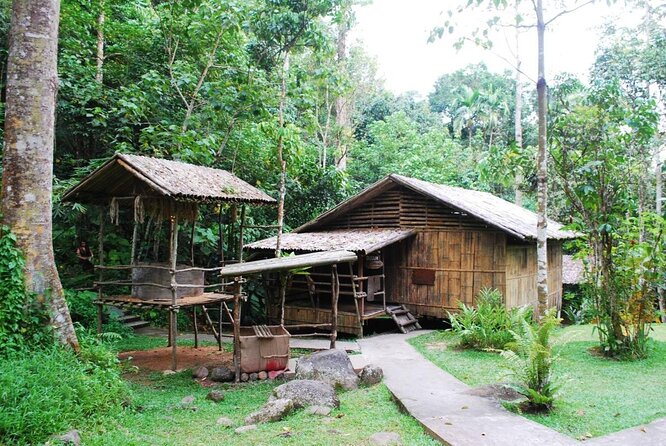
The Rungus stop presents a traditional longhouse built from wood, bamboo, and atap, a palm-leaf roofing material. A Rungus longhouse contains between seven and 15 family apartments, creating a shared structure for several households.
The house is raised above the ground. This helped protect people from flooding and wildlife, including snakes. That practical detail makes the building easier to understand. The longhouse is not just a striking piece of architecture; it reflects the conditions in which families lived.
I find this one of the most useful sections for understanding how housing can support community life. Several family spaces gathered under one roof suggest a different arrangement from the detached homes many visitors know.
Look carefully at the materials as you walk through. Wood, bamboo, and palm leaves are not decorative extras here. They show how local building traditions relied on resources available in the surrounding area.
The drawback is time. Twenty minutes can pass quickly inside a longhouse, especially if the guide is explaining both construction and social arrangements. Keep moving with the group and save detailed questions for a quiet moment.
The Lundayeh section, farming, animals, and preserved food
The Lundayeh, also known as Lun Bawang in the information provided for the tour, are traditionally agriculturalists. Their way of life included raising poultry, pigs, and buffaloes, along with hunting and fishing.
Food preservation is an important part of this presentation. Meat and fish were brined or pickled with salt and stored in hollow sections, helping families keep food for later use.
This section adds a practical note that many cultural tours miss. Traditional life depended not only on finding food, but also on making it last. Preserving meat and fish was a response to seasonal supply, storage needs, and the limits of older technology.
You may also notice that the tour does not present farming, hunting, and fishing as separate worlds. These activities worked together to support a household. The Lundayeh section helps you see how agriculture could be combined with animal keeping and food gathering.
The Bajau presentation and Sabah’s connection to the sea
The Bajau are often described to Western audiences as sea people. The tour explains that there are two main groups, East Coast Bajau and West Coast Bajau. The West Coast group settled and adapted to agricultural life, while the broader Bajau identity remains closely linked with seafaring.
This is a valuable reminder that labels can hide differences. Saying Bajau does not describe one identical way of life across Sabah. Location and history matter.
The section gives the tour a welcome coastal perspective after the farming and longhouse presentations. It also helps explain why Sabah’s cultures cannot be separated from their surroundings. Some communities developed around paddy fields, while others built traditions around water and boats.
The explanation is brief, so you will not leave with a full study of Bajau maritime culture. Still, it gives you the basic framework needed to notice the difference between East Coast and West Coast traditions during the rest of your time in Sabah.
The Murut stop and the meaning behind the demonstrations
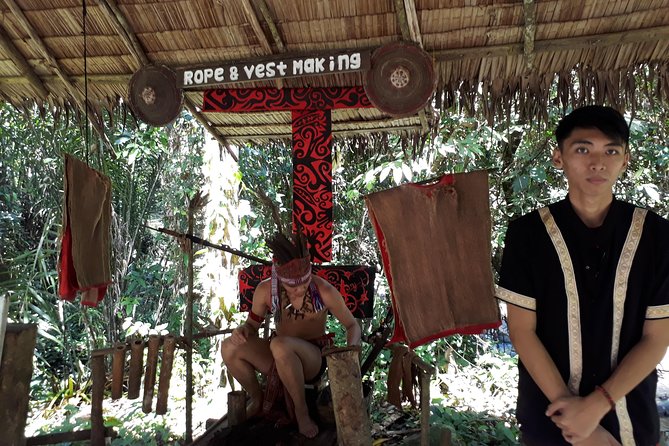
The Murut were the last major ethnic group in Sabah to give up headhunting. The tour places this historical fact alongside their traditional work as shifting cultivators who grew hill paddy and tapioca.
Murut families also supplemented their diet through blowpipe hunting and fishing. That makes the blowpipe demonstration more than a novelty. You can connect the object with food gathering and forest life.
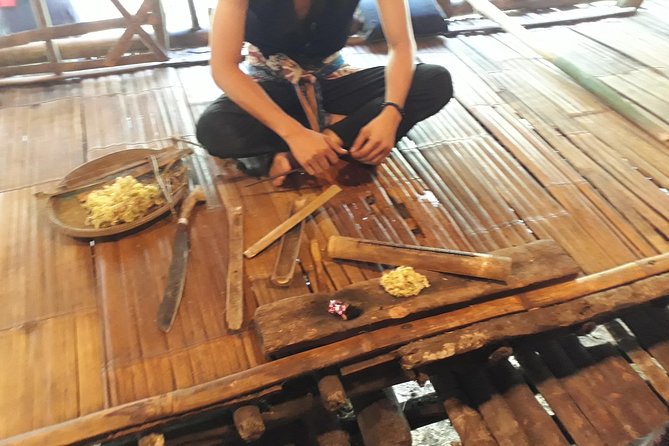
The tour also includes demonstrations connected with fire starting, tattooing, and blowpipe making. These activities are among the most memorable parts because they show skill in action. You are not only hearing about an old tool or custom; you are watching how it was made or used.
The guide also explains the symbolism behind these practices. That context matters. Without it, a blowpipe or tattoo can seem like a museum object. With it, you get a better sense of identity, status, belief, and survival.
The reference to headhunting may interest history-minded visitors, but the presentation is best understood within the wider story of Murut farming and community life. It is one historical element, not the whole culture.
Bamboo cooking, samples, and the food schedule
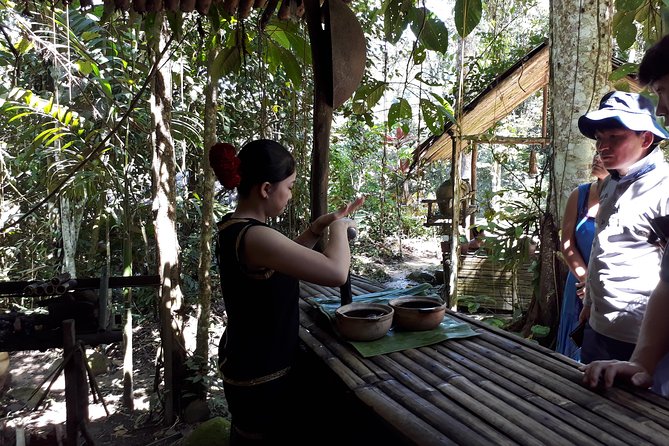
Food gives this tour a pleasant sensory break. Before lunch, you can smell bamboo cooking, and food and drink samples are included along the route. Those small tastes help connect the cultural displays to everyday life.
The 9 am departure includes a buffet lunch. The 1 pm departure includes afternoon tea instead. This difference is important when comparing the two sessions. If you want a full meal, choose the morning option. If your schedule favors an afternoon visit, expect the lighter food service.
The exact dishes are not specified, so I would not book this expecting a particular menu. The value is in having food included and seeing how cooking fits into the cultural program.
A buffet also makes sense for a short group tour. You can eat at your own pace rather than waiting for a series of courses. Personal expenses are not included, so keep that in mind for anything extra.
The dance performance and the tour’s overall rhythm
The live Borneo cultural dance performance is included in the price. It gives the visit a clear finale and adds movement after the more instructional parts of the route.
The strongest rhythm of the tour is the mix of listening, looking, tasting, and watching. A talk about a longhouse is followed by a building to explore. A discussion of food preservation leads into samples or cooking. A lesson about traditional tools is supported by a demonstration.
That variety is why the tour feels fuller than a basic museum visit. It also explains why the program can suit families and first-time visitors who may find long historical talks tiring.
At the same time, the planned format may not satisfy you if you prefer independent exploration. You follow the route and keep to the group’s schedule. The benefit is that you see the main presentations in four hours. The cost is less free time.
Is $90 a fair price?
At $90 per person, this is not the cheapest way to spend half a day in Kota Kinabalu. The price becomes easier to justify when you count what is included: hotel pickup and drop-off, air-conditioned transport, a driver or guide, admission, food according to the session, and the dance performance.
You are also paying for convenience. Reaching a countryside museum independently could require arranging transport and admission on your own. Here, the main planning work is handled for you.
The small maximum group of 15 adds value, though the real benefit depends on your departure size. A group of five or six should feel more personal than a full coach. A group close to the limit will still be manageable, but demonstrations may draw everyone into one viewing area.
I would call the price reasonable for visitors who want an organized cultural introduction and have limited time. It is less compelling for someone who has already spent several days visiting Sabah communities independently or who wants a private, slow-paced guide.
The tour is booked about 18 days in advance on average. That is a useful signal to plan ahead, especially if you need a particular morning or afternoon session.
Who should book this experience?
I would recommend Mari Mari Cultural Village to you if:
- You have only a short stay in Kota Kinabalu.
- You want to learn about several Sabah cultures in one outing.
- You prefer transport and admission arranged in advance.
- You enjoy demonstrations, food samples, and live performance.
- You are visiting by cruise ship and can match the port schedule.
- You are traveling with family members who benefit from a varied program.
I would be more cautious if you want a quiet, independent visit or a long academic discussion of one culture. The four-hour schedule gives you breadth, not extensive detail.
Most people can participate, according to the tour information. No special restriction is listed, but the route includes time on foot between cultural sections, so you should be comfortable keeping pace with a group.
Booking details worth keeping in mind
Confirmation is provided when you book. Pickup and drop-off are included from Kota Kinabalu hotels, but the information does not state that every possible accommodation outside the city is covered, so check your pickup point before paying.
Free cancellation is available if you cancel at least 24 hours before the experience starts. Cancellations made inside that window are not refunded, and changes inside 24 hours are not accepted. The cut-off follows local time.
The experience is operated by Magunatip Holidays Sdn Bhd. Several guides are praised by name in the supplied feedback, including Sam and Joe. One especially useful detail is that the driver helped explain a cruise passenger’s tight schedule to the village staff, so port visitors should communicate their timing clearly at pickup.
Should you book Mari Mari Cultural Village?
Book it if you want a well-organized first look at Sabah’s ethnic cultures, with transport, demonstrations, food, and dance handled in one half-day. I especially like the mix of practical subjects, from raised longhouses and paddy farming to fire starting, blowpipes, and food preservation.
The best choice is the 9 am session if you want the included buffet lunch. Choose the 1 pm departure if afternoon tea suits your schedule, or if you need to fit the visit around other morning plans.
Skip it if you dislike fixed group programs or want an unplanned encounter with daily village life. For most first-time visitors to Kota Kinabalu, though, the range of cultures and easy transport make the $90 fee a fair trade for a useful, lively introduction to Sabah.
FAQ
How long does the Mari Mari Cultural Village tour last?
The tour lasts approximately four hours.
Is hotel pickup and drop-off included?
Yes. Round-trip pickup and drop-off from Kota Kinabalu hotels are included.
What cultures are presented at the village?
The tour introduces the Dusun, Rungus, Lundayeh, Bajau, and Murut cultures.
What demonstrations are included?
You can see demonstrations of blowpipe making, fire starting, and tattooing, along with bamboo cooking and other cultural presentations.
Is food included?
Yes. The 9 am session includes a buffet lunch, while the 1 pm session includes afternoon tea.
What transport is used?
Groups of six or more travel by air-conditioned minivan. Groups of five or fewer travel by Innova.
What are the start times for cruise passengers?
Cruise passengers should note that the morning session starts at 10 am and the afternoon session starts at 2 pm.
What is the cancellation policy?
You can cancel for a full refund up to 24 hours before the experience starts. Cancellations or changes made less than 24 hours before the start time are not accepted for a refund.
Just added in Kota Kinabalu
- Island Hopping ( Manukan & Sapi Island ) From Kota Kinabalu★ 4.5 · 9 reviews
- Zen & Splash: Stand-Up Paddleboard (SUP) Yoga in Tanjung Aru★ 5.0 · 1 review
- Sepanggar Island Luxury Boat★ 5.0 · 1 review
- Discover Sailing Experience in Tanjung Aru Beach★ 3.0 · 1 review
- Join us for a RAID Try Dive in Kota Kinabalu★ 5.0 · 27 reviews
- Mangrove Kayaking Experience in Borneo★ 5.0 · 8 reviews
- Monsopiad Cultural Village Visit with Private Transfer from Kota Kinabalu★ 4.5 · 5 reviews
- Stand Up Paddle Boarding with Sunrise/Sunset Tour at Kota Kinabalu with transfer★ 3.0 · 1 review
Half-Day, compared.
Private Half-Day Batu Caves and Cutural Tour in Kuala Lumpur
Read our review →
Kuala Lumpur Suburbs Batu Caves Half-Day Tour (SIC/Shared Tour)
Read our review →
Country & Batu Caves Half-Day Tour (Private Tour)
Read our review →
Private Half-day Batu Caves and Cultural Tour Kuala Lumpur *2026*
Read our review →
Half-Day Guided Rock Climbing in Batu Caves, Malaysia
Read our review →Browse the lists this tour appears in