
Reviewed · HISTORICAL TOURS
Kuala Lumpur Heritage Walk
Kuala Lumpur’s best stories are often found on foot. This four-hour heritage walk links Central Market, Chinatown, old temples, street food, and the places tied to the city’s early tin-mining days. I like the small-group format, which keeps the walk personal, and I like the chance to taste Malaysian, Chinese, and Indian food rather than simply look at buildings. The main consideration is the walking itself: you need moderate fitness, and Kuala Lumpur’s heat can make a four-hour morning feel longer.
The route also gives you a useful introduction to the city’s mixed religious life. You may light candles or joss sticks at Sin Sze Si Ya Temple if you wish, learn about Hindu worship at Sri Maha Mariamman Temple, and hear how Kuala Lumpur grew around different immigrant communities. Food is a strong part of the experience, though anyone with dietary needs should give notice when booking.
In This Review
- Key Points to Know Before You Go
- Why This Walk Makes Sense on a First Morning
- Breakfast at Restoran Yusoof dan Zakhir
- Sin Sze Si Ya Temple and Taoist Practice
- Sri Maha Mariamman Temple’s Hindu Traditions
- Chinatown, Wet Market, and Chinese Food
- Sultan Abdul Samad Jamek Mosque and the City’s Beginning
- Lebuh Ampang and an Indian Lunch
- What the Food Tastings Are Really Worth
- Start at Central Market and Dress for the Walk
- Who Should Book This Heritage Walk?
- FAQ
- What time and where does the tour start?
- How long does the Kuala Lumpur Heritage Walk last?
- What food is included?
- Is a vegetarian option available?
- How large is the group?
- What should I bring?
- Should You Book It?
Key Points to Know Before You Go
- Start with Malaysian breakfast: The morning begins at Restoran Yusoof dan Zakhir, where food is part of the welcome rather than an afterthought.
- Visit two working temples: Sin Sze Si Ya Temple introduces Taoist practice, while Sri Maha Mariamman Temple offers a look at Hindu worship and deities.
- Taste food in Chinatown and Lebuh Ampang: The route includes Chinese snacks and an Indian meal stop, with food choices that may be unfamiliar if you stick to standard tourist restaurants.
- Hear how Kuala Lumpur began: At Sultan Abdul Samad Jamek Mosque, your guide explains the city’s origins and its connection to tin mining.
- Keep the group small: No more than 10 people are accepted, giving you a better chance to ask questions and hear the guide clearly.
- Plan for practical details: The walk starts at 9:00 a.m. from the Tourist Information and Interaction Centre at Central Market and returns there after about four hours.
Why This Walk Makes Sense on a First Morning
Kuala Lumpur can feel scattered at first. Modern towers, colonial buildings, food streets, shopping arcades, temples, and markets sit within a relatively compact central area, but the city’s story is not always obvious when you walk alone. This tour gives those pieces a clear order.
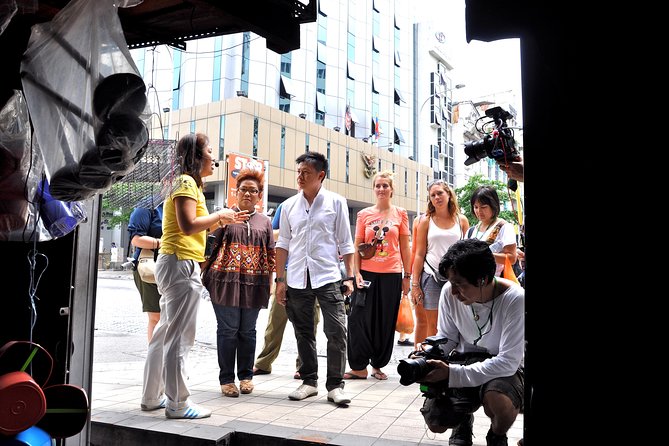
You begin near Central Market, then move through Chinatown and the older streets around the Klang and Gombak river area. The guide connects the buildings and religious sites to the people who shaped the city, especially Chinese and Indian immigrants who brought their faiths, trades, food, and customs to Kuala Lumpur.
I like this approach because the tour is not only a photo stop at a temple or a quick walk through a market. You get an explanation of why these places matter. That context can make the rest of your time in Kuala Lumpur easier. After the walk, you will have a better sense of which areas deserve a second visit and which foods you want to seek out on your own.
The published rating is 4.6 out of 5 from 23 ratings, with 91 percent recommending the experience. The strongest praise centers on the guides, the food tastings, and the unusual activities. Guides named in the feedback include Sean, Winnie, and Kristin. Kristin is praised for involving the group in activities such as making roti and taking part in a Chinese temple prayer, while Winnie is remembered for her enthusiasm and for helping the group encounter an Indian wedding by chance.
That last detail also shows the nature of the walk. It is structured, but not locked into a museum-style script. Some temple visits and food stops can last longer if the group is interested, so the exact pace may vary.
More History Tours in Kuala Lumpur
- Historical Malacca Guided Day Tour (Shared Tour)
★ 5.0 · 2,172 reviews - Kuala Lumpur: Batu Caves & Historic Buildings Tour
★ 4.7 · 539 reviews - Historical Malacca Day Tour from Kuala Lumpur (Private Tour)
★ 5.0 · 515 reviews
Breakfast at Restoran Yusoof dan Zakhir
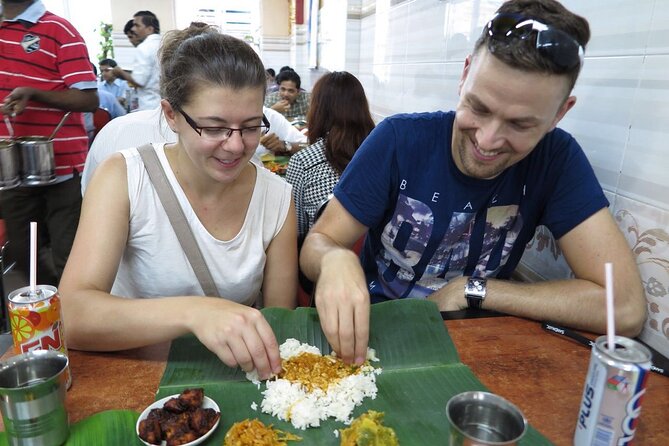
The first stop is Restoran Yusoof dan Zakhir for a Malaysian breakfast. You get about 15 minutes here, and the meal is included as part of the food tastings.
This is a smart way to begin. Food gives you an immediate connection to daily life, and breakfast in Malaysia can be quite different from the sweet pastries and cereal common in many hotels. The stop also gives the guide a chance to explain what you are eating and how it fits into local food culture.
The supplied details do not specify the exact breakfast dish, so you should not arrive expecting one particular plate. The useful point is that this is a proper local food stop, not simply a packaged snack handed out during the walk.
If you have allergies, follow a vegetarian diet, or have another dietary requirement, tell the operator at booking. A vegetarian option is available, but it needs to be requested in advance. I would also eat a light breakfast before setting out if you need a large meal, since this is a short tasting stop rather than a long restaurant sitting.
Sin Sze Si Ya Temple and Taoist Practice
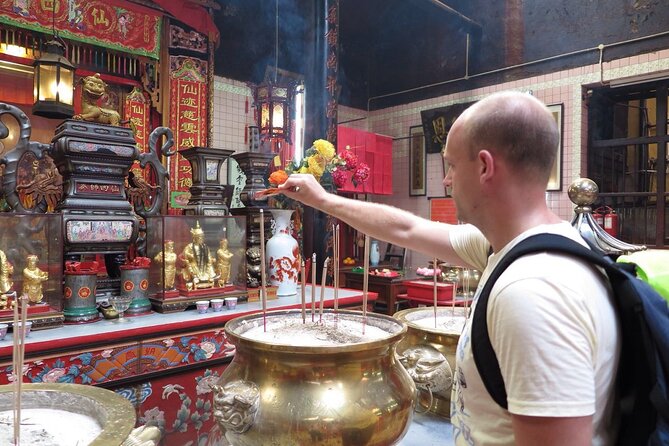
At Sin Sze Si Ya Temple, the guide explains Taoist culture and religious practice. You may also light candles, burn joss sticks, and paste a Goodluck Man on the wall, but these activities are optional and happen only if you want to take part.
That optional element is important. You are not being pushed into a ritual for the sake of entertainment. You can watch, ask questions, or participate according to your comfort level. For many people, this will be one of the most memorable parts of the walk because it turns a religious site from something you simply photograph into a place where you can better understand what people do there.
You have about 15 minutes at the temple. That is enough for an introduction, but not enough for a long study of every detail. If you are deeply interested in Taoism, you may wish you had more time. Still, the short visit works well within a walking tour that also has several food and cultural stops.
Your guide’s role matters here. A good explanation can prevent awkward behavior and help you understand when to be quiet, where you can stand, and which customs are optional. The small group should make it easier to ask those questions without holding up a large crowd.
Sri Maha Mariamman Temple’s Hindu Traditions
The next temple introduces Hindu culture, religious practice, and Hindu deities. The visit lasts around 20 minutes, though the time can change depending on the group’s interest.
Sri Maha Mariamman Temple adds an important second perspective to the morning. Instead of treating Kuala Lumpur’s communities as a single blended culture, the tour shows how distinct traditions remain visible in the city. You can compare the Taoist temple with the Hindu temple and see how different communities worship within the same old central district.
As with the earlier stop, respectful behavior matters. Listen to your guide before taking photographs or entering any areas. The tour description does not promise a formal ceremony, so think of this as an introduction to the temple and its religious setting, not a scheduled worship event.
The flexibility is useful, but it also means the walk may not feel identical every day. A group very interested in Hindu deities may spend longer here. A group more focused on food or street life may move along sooner. You should expect a guided overview rather than a fixed, minute-by-minute museum visit.
More Walking Tours in Kuala Lumpur
- Kuala Lumpur Local Street Food Private Walking Tour by Night
★ 4.5 · 224 reviews - Kuala Lumpur: Nightlife Walking Tour with Local Guide
★ 5.0 · 33 reviews - Half Day Cultural And Heritage Walking Tour in Kuala Lumpur
★ 5.0 · 28 reviews - Kuala Lumpur InfoFun Walking Tour Experience
★ 5.0 · 24 reviews
Chinatown, Wet Market, and Chinese Food
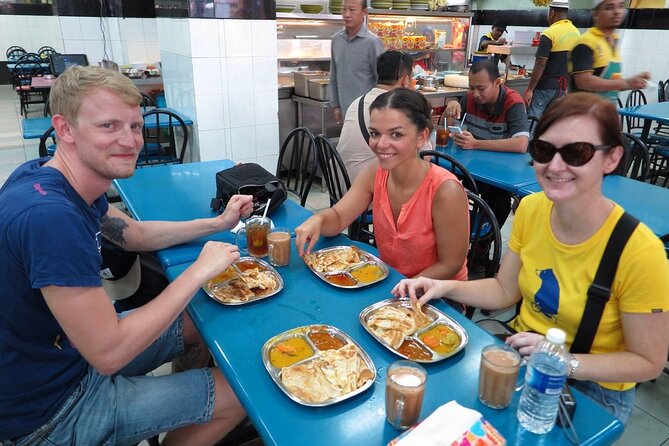
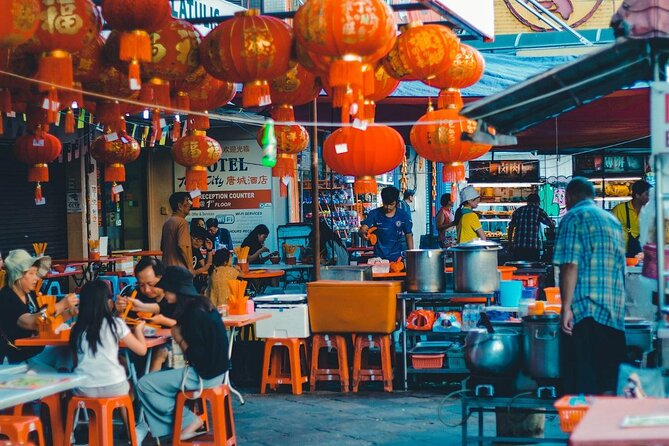
The Chinatown portion combines a neighborhood walk, a wet market, and Chinese food known locally. You get around 20 minutes at this part of the route, but the timing can depend on the group’s interests.
This is one of the places where the walk earns its price. Chinatown is easy to visit alone, but it is harder to know what to taste, what to look for, and how the area fits into Kuala Lumpur’s wider story. Your guide helps you move beyond the obvious shopping streets and toward food and market details you might otherwise pass by.
The food tastings are not merely a way to fill your stomach. They let you compare Chinese influences with the Malaysian and Indian foods served elsewhere during the morning. The result is a more useful picture of Kuala Lumpur’s food culture, which grew from contact between many communities.
A wet market can be crowded, wet underfoot, and strongly scented. That is part of its character, but it will not suit everyone. Wear shoes with a good grip and avoid bringing anything you do not want to carry through a busy market. The tour does not promise a long market visit, so treat it as a short, focused look rather than a full shopping trip.
Sultan Abdul Samad Jamek Mosque and the City’s Beginning
At Sultan Abdul Samad Jamek Mosque, the guide explains how Kuala Lumpur began. You do not enter for a scheduled religious visit according to the supplied details, but you hear the story of the city and its early development from this important central location.
This stop gives the morning its historical frame. Kuala Lumpur began as a tin-mining settlement, and the city’s growth was tied to workers, traders, and communities arriving from different places. After seeing temples and tasting food, you can better understand that the city did not develop from one single cultural tradition.
The stop lasts about 15 minutes, so the explanation will be concise. I would pay close attention here because the story helps connect the rest of the route. Without it, Central Market, Chinatown, Lebuh Ampang, and the religious sites might seem like separate attractions. With it, they become parts of one urban story.
The mosque is also a reminder to dress and behave respectfully around religious places. The supplied information does not give a dress code or promise entry, so follow the guide’s instructions and do not assume every interior area is open to the group.
Lebuh Ampang and an Indian Lunch
Lebuh Ampang is the final major stop, with about 30 minutes set aside for authentic Indian cuisine. Your guide explains the street’s past role and uses the area to show another part of Kuala Lumpur’s immigrant history.
This is a strong ending because it brings the cultural discussion back to food. You have already tried Malaysian and Chinese tastes, and now you get an Indian meal stop. The meal helps show how Indian traditions remain part of the city’s everyday life, not just something preserved behind temple doors.
The food portion may be especially rewarding for people who normally play it safe at restaurants. One piece of feedback praised the tour for offering foods the person would not have tried alone. That is a fair description of the tour’s value: the guide lowers the risk of ordering something unfamiliar and gives you a reason to try it.
Another memorable account involved Winnie, whose enthusiasm and local awareness helped the group encounter an Indian wedding. You should not expect a wedding on your own walk, of course, but the story points to a useful benefit of a live guide. A guide who knows the streets can notice everyday events that a fixed sightseeing route would miss.
What the Food Tastings Are Really Worth
The price is $60 per person. That is not the cheapest way to walk around central Kuala Lumpur, especially if you could find many of the streets and temples without help. The value comes from combining a guide, several tastings, cultural explanations, and a small group in one four-hour morning.
I would judge the price against your travel style. If you enjoy finding everything alone, already know Kuala Lumpur, or mainly want a fast checklist of landmarks, the cost may feel high. You are paying for interpretation and access to local food choices, not for expensive admission tickets. Most stops are free, and the included items are bottled water, food tastings, and an English-speaking guide.
For a first visit, the price is easier to justify. You get a practical orientation, several flavors, and a clear introduction to the city’s Chinese, Indian, Malay, Taoist, and Hindu connections. The limit of 10 people also matters. A smaller group can stop at a food stall or temple without the slow shuffle of a large coach excursion.
The tour runs approximately four hours, but some stops are flexible. If your group is very interested in a temple or market, the balance may shift. Do not book a tight appointment immediately after the finish time. The activity returns to its starting point, but you should leave some breathing room.
Start at Central Market and Dress for the Walk
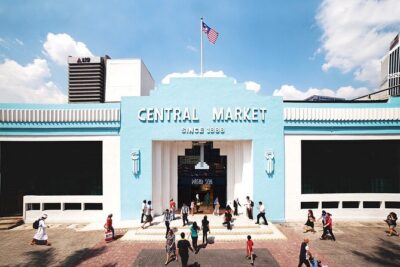
The meeting point is the Tourist Information and Interaction Centre, or TiiC, at Lot 02-03, Mezzanine Floor, Central Market Annexe, Jalan Hang Kasturi, City Centre, Kuala Lumpur. The start time is 9:00 a.m., and the walk ends back at the same meeting point.
Central Market is a practical base because it is near public transportation and close to several of the places on the route. You should arrive early enough to find the exact mezzanine-floor location without rushing. Hotel pickup and drop-off are not included, so plan your own way to Central Market.
This is a walking experience, not a vehicle tour. Wear comfortable shoes, bring sun protection, and carry a tumbler if possible. Bottled water is provided, and you can refill your tumbler at the tour center. Caps and hats are not included, so bring your own if you want one.
The moderate fitness requirement is worth taking seriously. Four hours on foot, with markets and religious sites, can be tiring in warm weather. You may also encounter uneven or wet surfaces in the market area. The tour suits you best if you are comfortable walking for several hours with short pauses.
Who Should Book This Heritage Walk?
I would recommend this walk to first-time visitors who want a quick but meaningful introduction to central Kuala Lumpur. It is also a good fit if you plan your own sightseeing but want help understanding local food and religious customs at the start of your stay.
Food-focused visitors should pay special attention. The combination of Malaysian breakfast, Chinese tastings, and Indian cuisine gives you a useful first taste of the city. The guide-led setting is especially helpful if you are unsure what to order or do not want to eat alone at unfamiliar stalls.
The experience is less suitable if you want a relaxed, slow-paced day with long visits at each temple. The route covers several stops in four hours, and some visits are short. It may also be a poor match if you dislike heat, markets, or walking.
The minimum age is 11, and at least two people are required per booking. The maximum group size is 10. Passport name, number, expiry date, and country are required for all participants when booking, so have those details ready.
FAQ
What time and where does the tour start?
The walk starts at 9:00 a.m. from the Tourist Information and Interaction Centre, located at Lot 02-03 Mezzanine Floor, Central Market Annexe, Jalan Hang Kasturi, City Centre, Kuala Lumpur.
How long does the Kuala Lumpur Heritage Walk last?
The experience lasts approximately four hours and ends back at the starting point.
What food is included?
Food tastings include a Malaysian breakfast, Chinese foods in Chinatown, and authentic Indian cuisine at Lebuh Ampang. The exact dishes are not specified.
Is a vegetarian option available?
Yes. A vegetarian option is available, but you should request it when booking. You should also provide any other dietary requirements in advance.
How large is the group?
The tour accepts a maximum of 10 people. A minimum of two people per booking is required.
What should I bring?
Bring comfortable walking shoes, sun protection, and a tumbler if you have one. Bottled water is provided, and you can refill a tumbler at the tour center. Caps and hats are not included.
Should You Book It?
Book this Kuala Lumpur Heritage Walk if you want your first morning in the city to include real food, religious traditions, and the stories behind old neighborhoods. The strongest reasons are the small group, the three-part food experience, and guides such as Sean, Winnie, and Kristin, whose energy and personal explanations appear to shape the day.
Skip it if you prefer completely independent wandering or want long, detailed visits at each temple. At $60, the tour is not a bargain street walk, but it offers useful guidance, food tastings, and a thoughtful introduction to Kuala Lumpur’s mixed cultural roots. For many first-time visitors, that is a fair trade for four well-organized hours.
Just added in Kuala Lumpur
- Explore Kuala Lumpur: Iconic City Landmarks & Batu Caves★ 5.0 · 15 reviews
- AVANI Sepang Goldcoast Resort Hotel TO Kuala Lumpur Hotel Door to Door Transfer★ 4.5 · 3 reviews
- Private Hire Taxi Driver Port Klang Cruise Terminal To KL Tour★ 5.0 · 1 review
- Batu Caves And Putrajaya Cruise Excursion Tour From Port Klang★ 5.0 · 1 review
- Airport Layover: Kuala Lumpur Full-Day Tour★ 4.0 · 1 review
- Kuala Lumpur Airport Transfer★ 5.0 · 29 reviews
- Transfer To Avani Sepang Goldcoast Resort★ 5.0 · 2 reviews
- Airport Layover Tour: Kuala Lumpur Full-Day★ 4.5 · 6 reviews
Historical Tours, compared.
Historical Malacca Guided Day Tour (Shared Tour)
Read our review →
Historical Malacca Day Tour from Kuala Lumpur (Private Tour)
Read our review →
Private Half-day Batu Caves and Cultural Tour Kuala Lumpur *2026*
Read our review →
Malacca Historical Private Tour With Personal Chauffeur
Read our review →Browse the lists this tour appears in