Reviewed · GUIDED
Kuala Lumpur Self-Guided Audio Tour
Kuala Lumpur rewards curious walkers. This self-guided tour links 14 major sights across the city, pairing each stop with short audio stories about Malay, Chinese, Indian, Islamic, and colonial influences. I like that you can start and finish anywhere, and I like the six-day access period, which gives you room to split the route instead of racing through it.
The Google My Maps route is the strongest practical feature. It helps you find places spread across several city areas, while the SoundCloud playlist supplies background as you go. The main caution is audio quality and depth: one assessment found the descriptions basic, with narration from a non-native English speaker, and the playlist somewhat clumsy to use.
- Fourteen landmarks in one route: Stations, temples, museums, gardens, markets, mosques, and skyscrapers all make the list.
- Start wherever you like: Kuala Lumpur Sentral, Chinatown, KLCC Park, or any other stop can serve as your starting point.
- Six days of access: You do not have to complete the route in one three-hour stretch.
- Useful map, basic audio: The map is practical, but the commentary may not satisfy history buffs.
- Three paid-entry stops: The Islamic Arts Museum, Kuala Lumpur Butterfly Park, and Petronas Twin Towers require separate admission.
- A private experience: Only your group uses the self-guided tour, with no guide or scheduled meeting required.
In This Review
- What You Get for $9 in Kuala Lumpur
- Starting at KL Sentral and Brickfields
- Thean Hou Temple and Islamic Arts
- Green Space at Taman Botani Perdana
- Chinatown, Sri Maha Mariamman Temple, and Central Market
- City Gallery, Sultan Abdul Samad Building, and Jamek Mosque
- KLCC Park and the Petronas Twin Towers
- Using the SoundCloud Audio Without Frustration
- Is the Three-Hour Plan Realistic?
- Who Will Get the Most from This Tour?
- Should You Book the Kuala Lumpur Audio Tour?
- FAQ
- How much does the Kuala Lumpur Self-Guided Audio Tour cost?
- How long does the tour take?
- Can I choose my own starting point?
- How do I receive the audio guide?
- Do I need to download an app?
- How long do the access links remain valid?
- Are attraction entry fees included?
- Is transportation included?
- Is this a group tour with a live guide?
What You Get for $9 in Kuala Lumpur

At $9 per person, this is best viewed as a low-cost orientation tool, not a full guided tour. You receive two private links on your selected travel date: one to the audio playlist and one to an interactive map showing all 14 stops.
The audio is available through SoundCloud in a web browser. You do not need to download a tour app, which keeps the setup simple, though a playlist with many separate tracks may take a little patience to operate. The map links each point to its matching audio guide, so it is the better tool for moving around the city.
The tour is listed at about three hours. That timing makes sense only if you spend roughly ten minutes at each stop and keep moving between them. The actual visit becomes longer once you add transport, photographs, meals, museum time, and the inevitable pause when Kuala Lumpur gives you something interesting to look at.
I would treat the three-hour estimate as a framework rather than a promise. You can listen to the full playlist before setting out, choose only the stops that matter most, or divide the route over the six-day access period.
Starting at KL Sentral and Brickfields
Kuala Lumpur Sentral Railway Station is a logical opening point if you arrive by train or want to begin in a modern part of the city. The audio introduces Malaysia’s largest transit hub, its architecture, and its role in connecting Kuala Lumpur with the wider country.
This stop gives you a useful first contrast. Kuala Lumpur is not only old mosques and colonial buildings. It is also a city of rail lines, large transport centers, and ambitious modern construction.
From there, the route moves into Little India Brickfields, where the focus shifts from steel and transit to the Indian Malaysian community. Expect commentary on the district’s past, cultural importance, colors, and scents.
Ten minutes is enough for a first look, but it is not much time if you want to shop, eat, or pause at a restaurant. The audio can provide context, yet you should feel free to stop the clock here. The entire point of a self-guided tour is that the schedule belongs to you.
A few more Kuala Lumpur days worth comparing
- Kuala Lumpur Self Guided Sherlock Holmes Murder Mystery Game
★ 5.0 · 1 review
Thean Hou Temple and Islamic Arts
Thean Hou Temple is one of the largest Chinese temples in Southeast Asia, and it brings a strong religious and architectural element to the route. The audio points out symbolism in the design and explains the temple’s place in Kuala Lumpur’s Chinese community.
This is one of the stops where narration can add real value. Religious buildings often contain visual details that are easy to overlook when you are simply taking photographs. Listen for the explanations, then give yourself time to inspect the design rather than treating the temple as a quick checkbox.
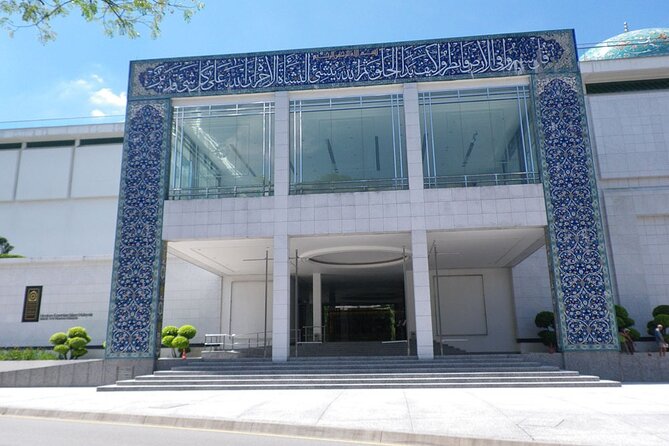
The next stop, the Islamic Arts Museum Malaysia, changes the subject again. Its collection is described as the world’s largest collection of Islamic decorative arts, with material that helps explain Islamic culture and its influence on Malaysian society.
Admission is not included, so this is one place where the $9 price does not cover the complete visit. The ten-minute stop in the plan is enough for an introduction, but not enough for a serious museum visit. If art and religion are priorities for you, make this a longer stop and use the audio as preparation rather than a replacement for the galleries.
Green Space at Taman Botani Perdana
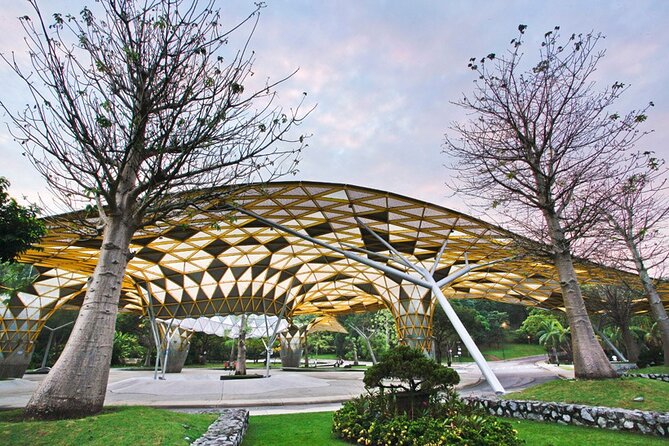
After temples and museum displays, Taman Botani Perdana offers a change of pace. The garden sits in the center of Kuala Lumpur and gives the route a nature break between built-up districts.
The audio covers the park’s history and botanical collections. That can help you see the gardens as part of the city’s planning rather than simply a patch of greenery between attractions.
The planned ten minutes is short. I would use this stop to rest, check the map, and decide if you want to continue immediately or split the route. The tour specifically allows breaks and multiple days, so there is no prize for completing every stop without sitting down.
At Kuala Lumpur Butterfly Park, the focus turns to tropical wildlife and conservation. The park is home to thousands of butterflies, and the commentary explains its ecosystem and conservation work.
Admission is not included here either. That matters because this stop works best when you actually enter and spend time looking around. If you only stand outside and listen, you will miss the main reason for including it. Plan for a separate ticket and more than ten minutes if the park is high on your list.
Chinatown, Sri Maha Mariamman Temple, and Central Market

Chinatown gives you a look at one of Kuala Lumpur’s best-known Chinese districts and the way it has changed over time. The audio focuses on the area’s past and evolution, helping connect present-day streets with the older community that shaped them.
This is a useful place to exercise your own judgment. The tour supplies a fixed point and a story, but you can linger, browse, or move on. The stop is free to enter, and there is no need to force it into a strict ten-minute slot.
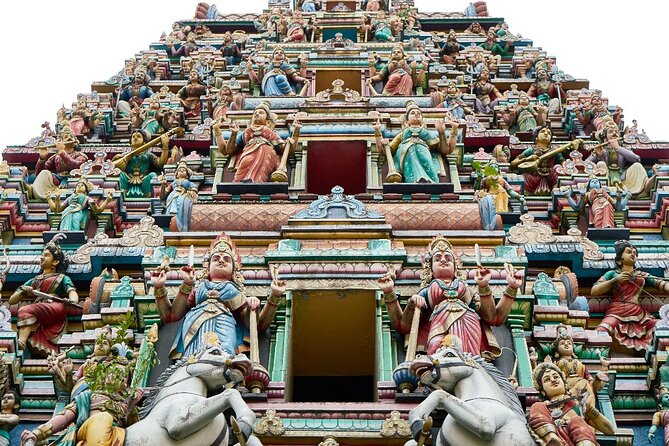
Nearby, Sri Maha Mariamman Temple adds a Hindu chapter to the city’s religious story. It is identified as Kuala Lumpur’s oldest Hindu temple, with attention to its architecture and importance to the local Hindu community.
Because the tour brings together Buddhist or Chinese, Hindu, Islamic, and colonial sites, its greatest strength is the range of viewpoints. You are not getting a single story about Kuala Lumpur. You are getting a basic introduction to several communities that helped shape it.
Central Market Kuala Lumpur continues that cultural theme in a more commercial setting. The audio explains how the site changed from a wet market into an arts and crafts center.
This is a good stop for visitors who want an easy connection between heritage and present-day shopping. The market is free to enter, and the commentary gives you a reason to notice its transformation instead of treating it as just another retail stop.
A completely different kind of day out:
- Kuala Lumpur: Batu Caves Half-Day Tour with Pick-Up Option
★ 4.5 · 4,288 reviews - Private Half-Day Batu Caves and Cutural Tour in Kuala Lumpur
★ 5.0 · 3,107 reviews - Sambal Streets Kuala Lumpur Food Tour with 15+ Tastings
★ 5.0 · 2,438 reviews - Historical Malacca Guided Day Tour (Shared Tour)
★ 5.0 · 2,172 reviews
City Gallery, Sultan Abdul Samad Building, and Jamek Mosque
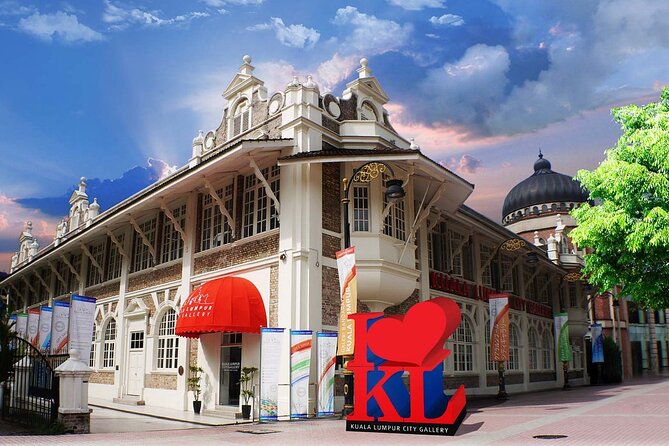
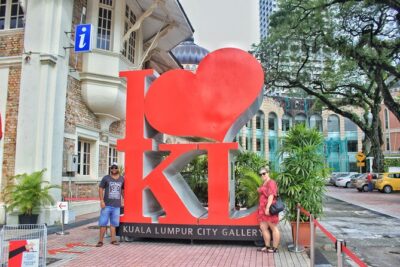
At Kuala Lumpur City Gallery, the emphasis turns to the capital’s past, present, and future. You hear about rapid development and the city’s well-known landmarks.
That makes this stop useful before the final modern icons. It provides a bridge between the older city center and the high-rise Kuala Lumpur represented by KLCC and the Petronas Twin Towers.
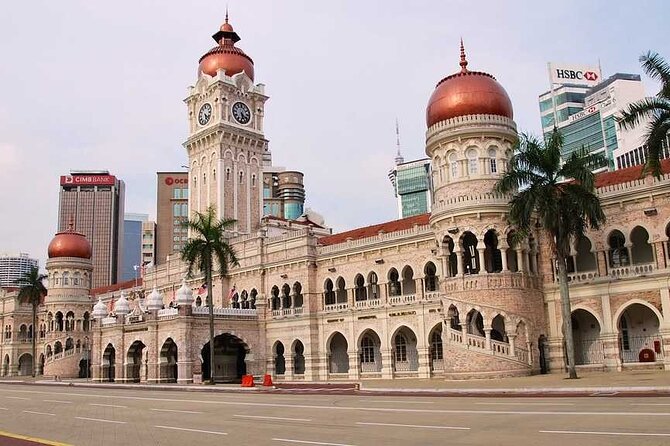
The Sultan Abdul Samad Building is one of the route’s key colonial-era sights. Its Moorish-style architecture is striking, and the audio explains its historical role, including its connection to Malaysia’s independence.
This is the kind of stop where the map and audio work well together. You can stand in front of the building, look carefully at its design, and listen to why it matters. The building is free to view from the route, though the audio does not turn the area into a full guided walk with a person answering questions.
Jamek Mosque brings the route back to religious architecture. It is Kuala Lumpur’s oldest mosque and combines Moorish and Islamic design.
The mosque’s location also reinforces the city’s layers. Within a relatively compact central area, the route moves between government architecture, markets, temples, and Islamic places of worship. Dress and entry arrangements are not explained in the supplied tour details, so check current visitor rules before you go.
KLCC Park and the Petronas Twin Towers
The final two stops show Kuala Lumpur’s modern face.
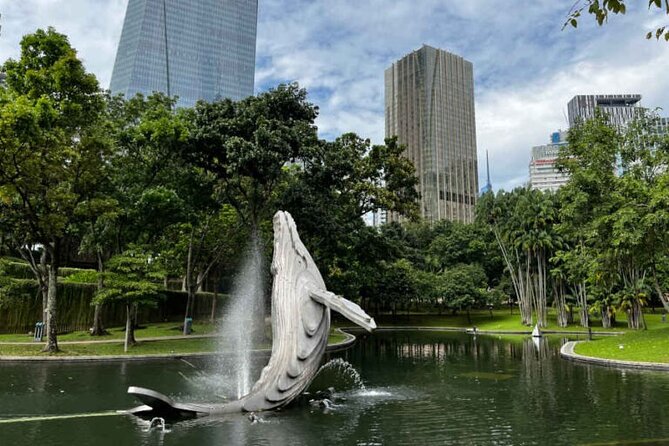
KLCC Park sits at the foot of the Petronas Towers and is presented as an urban green space with sustainable design features. The audio explains the park’s role in city planning, not just its function as a place to rest and take photographs.
This is a sensible pause before the towers. The park gives you room to look up at the surrounding development while also considering how open space fits into a major business district.
The Petronas Twin Towers are the closing landmark and the clearest symbol of Malaysia’s modernization. The commentary covers their groundbreaking design and their meaning in the country’s modern identity.
Entry is not included. If you plan to go inside, budget separately and allow more time than the listed ten minutes. If you only want exterior views, the tour still gives you useful context for the landmark, but the audio cannot substitute for a ticketed tower visit.
Ending here makes sense for visitors who want a dramatic finish. Still, you do not have to follow the suggested order. Starting at KLCC and working backward may suit your hotel or transport plans better.
Using the SoundCloud Audio Without Frustration
The instructions are simple: before your selected start time, you receive an email with the audio link and the map link. Open the SoundCloud page, then use the Google My Maps route to select each attraction.
I would prepare before leaving your hotel. Play a few audio tracks, confirm that the links work, and look at the route on the map. Since the audio is arranged as a playlist, it may not feel as polished as a dedicated sightseeing app. One assessment found the operation clunky and the descriptions quite basic.
That is the central weakness of this product. The audio can give you a useful starting point, but it may not provide enough detail for someone who already knows Kuala Lumpur’s history. Another practical criticism was that similar information could be found on Colonial Walk information boards near several locations.
The map, by contrast, is specifically useful. It can help you decide which stops fit your day and how to organize the route. I would rely on the map for navigation and use the audio selectively, especially at the temples, mosque, colonial buildings, and Petronas Towers.
Bring a charged phone and headphones. These are common-sense preparations for any phone-based tour, though the supplied details do not promise offline access, so you should not assume the audio will work without a connection.
Is the Three-Hour Plan Realistic?
The route assigns about ten minutes to each of the 14 attractions. That gives you 140 minutes of listening and sightseeing, leaving a small amount of the three-hour estimate for moving between stops.
In practice, the distances and paid attractions make the timing flexible rather than exact. You may spend more time at the Islamic Arts Museum, Butterfly Park, or Petronas Towers, while the railway station and City Gallery may be quicker depending on your interests.
The six-day access period is important here. You can make one central-city day of Chinatown, Central Market, the Sultan Abdul Samad Building, and Jamek Mosque, then visit the other areas later. You can also listen to the full playlist in advance and create a short route based on your own priorities.
Since no transport or pickup is included, you arrange movement between the stops yourself. The experience is near public transportation, and you decide where to begin and end. That freedom is helpful, but it also means you are responsible for planning the connections.
Who Will Get the Most from This Tour?
I would recommend it to a first-time Kuala Lumpur visitor who wants a low-cost introduction and prefers independent sightseeing. It is also a good fit if your group moves at different speeds, since nobody has to keep up with a guide or a larger party.
The tour may suit you if you like:
- Choosing your own start and finish point
- Combining several cultural traditions in one city walk
- Listening to short explanations rather than reading a guidebook
- Taking breaks or spreading sightseeing across six days
- Using a map to build your own route
I would be more cautious if you want detailed historical interpretation, polished narration, or help with transport between every stop. The $9 price is modest, but it pays mainly for convenience and organization. It does not include admission, transportation, or a live guide.
The private format is another plus for couples, families, or small groups who do not want to join strangers. Yet private does not mean personally guided. You receive links and explore on your own.
Should You Book the Kuala Lumpur Audio Tour?
Book it if you want a cheap framework for seeing many of Kuala Lumpur’s main sights and you value control over your schedule. The map is the most useful part, while the audio gives you a basic layer of context across religious, cultural, colonial, and modern sites.
Skip it if you expect a polished, in-depth production. The narration may sound less natural in English, and the SoundCloud format is not as smooth as a purpose-built tour app. You may find equivalent background on public information boards at some central stops.
My practical advice is to book only if you will use the flexibility. Pick five or six priority stops, check which three require separate admission, and use the six-day access period instead of trying to complete every location in one push. At $9, that makes the experience a reasonable planning aid, but not a substitute for a full guided tour or serious museum visit.
FAQ
How much does the Kuala Lumpur Self-Guided Audio Tour cost?
The price is $9 per person.
How long does the tour take?
The estimated duration is about three hours. Each of the 14 stops is planned for approximately ten minutes, not including transport or longer visits.
Can I choose my own starting point?
Yes. You can begin at any of the listed attractions and choose your own ending point in Kuala Lumpur.
How do I receive the audio guide?
On your selected travel date, before your starting time, you receive an email with private access links to the audio guide and interactive map.
Do I need to download an app?
The audio is accessed through a secure SoundCloud web link, and the route uses a secure Google My Maps link. The supplied information does not require a separate tour app download.
How long do the access links remain valid?
The private access links remain valid for up to six days.
Are attraction entry fees included?
No. Entry fees are not included wherever required. Separate admission is specifically noted for the Islamic Arts Museum Malaysia, Kuala Lumpur Butterfly Park, and Petronas Twin Towers.
Is transportation included?
No. Pickup, drop-off, and transportation between attractions are not included.
Is this a group tour with a live guide?
No. This is a private self-guided activity. Only your group participates, and you explore using the audio links and map.
Just added in Kuala Lumpur
- Explore Kuala Lumpur: Iconic City Landmarks & Batu Caves★ 5.0 · 15 reviews
- AVANI Sepang Goldcoast Resort Hotel TO Kuala Lumpur Hotel Door to Door Transfer★ 4.5 · 3 reviews
- Private Hire Taxi Driver Port Klang Cruise Terminal To KL Tour★ 5.0 · 1 review
- Batu Caves And Putrajaya Cruise Excursion Tour From Port Klang★ 5.0 · 1 review
- Airport Layover: Kuala Lumpur Full-Day Tour★ 4.0 · 1 review
- Kuala Lumpur Airport Transfer★ 5.0 · 29 reviews
- Transfer To Avani Sepang Goldcoast Resort★ 5.0 · 2 reviews
- Airport Layover Tour: Kuala Lumpur Full-Day★ 4.5 · 6 reviews
Guided, compared.
Historical Malacca Guided Day Tour (Shared Tour)
Read our review →
Genting Highland & Batu Cave Guided Day Tour (SIC/Shared Tour)
Read our review →
Cameron Highlands with Lunch Guided Day Tour (SIC/Shared Tour)
Read our review →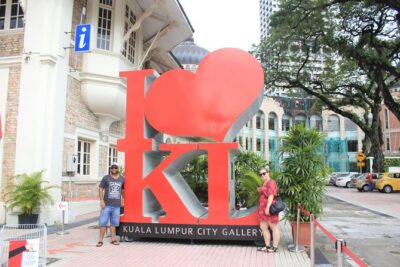
Kuala Lumpur Half Day Guided City Tour (SIC/Shared Tour)
Read our review →
Guided Snorkeling Day Trip, Kota Kinabalu, Sabah, Malaysia
Read our review →
Kuala Lumpur Grand Full Day Guided Tour with 25 Attractions (SIC)
Read our review →