
Reviewed · BATIK WORKSHOPS
Batik Bag Painting Workshop by myBatik
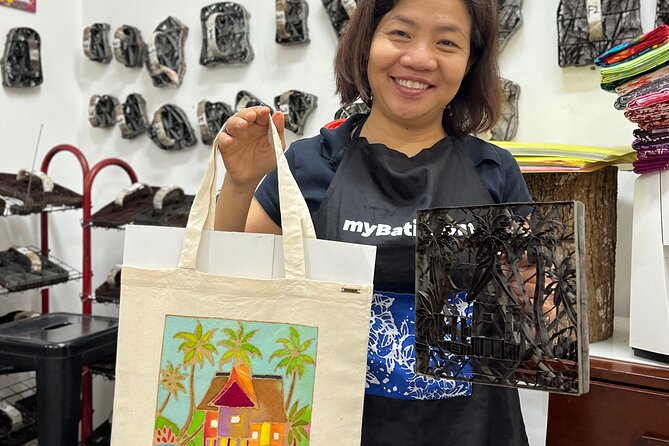
Paint your way into Malaysian culture. This 90-minute myBatik workshop gives you a real hands-on task, not just a quick demonstration: you draw with wax, add color, and take home a cotton bag you made yourself. I especially like the chance to learn the wax-resist method from start to finish, and I like that the class includes every material, an apron, gloves, and a workshop certificate.
The main consideration is the location. The meeting point is in Ampang Jaya, at the myBatik center, rather than directly beside the Kuala Lumpur Twin Towers. You also need an appointment, and the published details contain a small itinerary mismatch, naming Zoo Negara as a stop even though the activity itself takes place at myBatik.
In This Review
- Key points before you book
- What the myBatik workshop actually offers
- Wax, paint, and the Malaysian batik method
- Designing your 34-centimeter calico bag
- A private class with a family-friendly pace
- Finding the center in Ampang Jaya
- What happens during the 90 minutes
- Starting with a blank bag
- Creating the wax pattern
- Adding and mixing color
- Removing the wax
- Green Tomato Cafe and the batik gallery
- Is the $42 price fair?
- Booking timing, transport, and cancellation
- Who should book the myBatik bag workshop?
- Should you book it?
- FAQ
- How long does the batik bag workshop last?
- Where does the workshop take place?
- What time does the workshop start?
- What will I make during the class?
- Are workshop materials included?
- Can I take the finished bag home?
- Is the activity suitable for children?
- Is the activity private?
- Are food and drinks included?
- What is the cancellation policy?
Key points before you book

- Make a usable souvenir: Paint a 13-inch, 34-centimeter calico cotton bag and take your finished piece home.
- Learn the full wax-resist process: You create a pattern, apply wax, paint the fabric, and remove the wax to reveal the design.
- Good for families: Children below seven must have an adult with them, and most participants can take part.
- Private activity: Only your own group participates, which makes the class more personal than a large craft demonstration.
- Flexible daytime scheduling: Classes are offered throughout the day, with the stated start time at 10:30 a.m.
- Extra time is easy to fill: A garden café and batik gallery are available at the center, with breakfast, lunch, and snacks at Green Tomato Cafe.
What the myBatik workshop actually offers
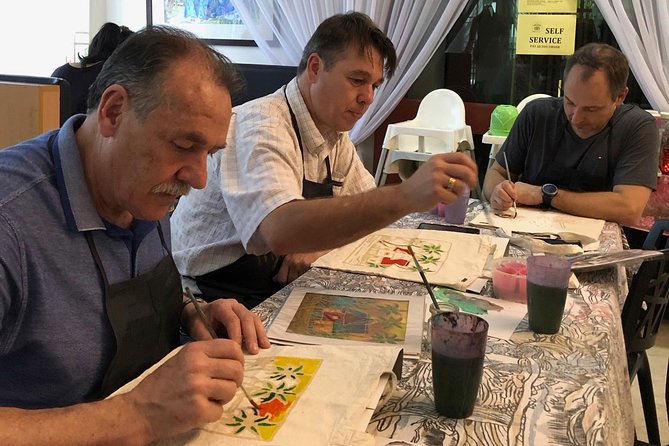
This is a craft class built around one simple object: a plain calico bag. You begin with undyed fabric and turn it into something personal using Malaysian batik methods.
The process uses wax as a barrier. Areas covered with wax resist the dye or paint, so the colors stay within the pattern you create. Once the painting is complete and the wax is removed, the design appears more clearly on the fabric.
That makes the class more satisfying than simply painting a souvenir. You can see how each stage affects the next. A crooked wax line, a strong color choice, or a little experimentation becomes part of the finished bag.
I like that the workshop does not require you to already know how to draw or paint. You can try a traditional Malaysian pattern, create something from scratch, or keep the design simple. The class also lets you practice combining primary colors to make your own secondary shades.
The activity is listed at about 90 minutes. That is enough time for a proper introduction, the creative work, and the finishing stage without turning the experience into a full-day commitment. You should still expect the pace to depend on how carefully you work. A child making a bold, simple design will move differently from an adult who wants to cover every inch of the bag.
More batik workshops in Kuala Lumpur:
- Batu Caves & Malaysian Handicraft Tour: Pewter & Batik Experience
★ 4.5 · 316 reviews - Batu Caves and Sari Experience with Batik Workshop
★ 5.0 · 181 reviews - Batik Coloring Workshop by myBatik
★ 5.0 · 48 reviews
Wax, paint, and the Malaysian batik method
The most valuable part of this experience is the direct contact with the technique. Traditional Malaysian batik uses wax-resist dyeing, a method practiced in Southeast Asia for hundreds of years.
The class gives you a small, manageable version of that process. You do not need to study a large textile or commit to a complicated garment. Instead, the cotton bag offers enough space to make a recognizable design while keeping the project practical.
You first use wax to mark the areas you want to protect. Those lines form the boundaries of your pattern. Then you select colors and fill the fabric. The class allows you to mix primary colors, which adds a small lesson in color theory to the craft.
That is useful for families. Children can see that colors do not simply appear from a paint tray. They can make new shades by combining basic colors, then watch how those choices work on fabric.
The final wax-removal stage is especially important. It reveals the finished pattern and shows why the wax mattered. Without that step, the class would feel like ordinary fabric painting. With it, you get a clear sense of how batik is made.
The supplies are included, so you do not need to bring paint, wax, brushes, or protective clothing. An apron and rubber gloves are provided. Those details matter because batik work can get messy, and you can concentrate on the design instead of protecting your clothes.
Designing your 34-centimeter calico bag
Your finished item is a 100 percent calico cotton bag measuring about 13 inches, or 34 centimeters, across. That size gives you a useful souvenir rather than a tiny sample that gets forgotten in a drawer.
The bag is also a good choice for a workshop because the shape is forgiving. You can create a central image, fill the surface with repeated marks, or use broad areas of color. The information provided does not promise a set template, so you should expect room for your own design choices.
I would encourage you to decide early how much detail you want. A simple pattern may be easier to finish neatly within 90 minutes. If you prefer a traditional look, ask about Malaysian patterns and colors during the demonstration. If you want a personal keepsake, sketching an uncomplicated symbol or repeating shape may work better than attempting a highly detailed scene.
The class gives you a chance to make something that reflects your own taste. That is one reason I rate it above a standard souvenir-shopping stop. You are not just selecting an item made by someone else. You are learning a process, making choices, and leaving with a record of your time in Kuala Lumpur.
You also receive a workshop certificate. It is a small touch, but it helps mark the activity as a cultural class rather than an unstructured craft table.
A private class with a family-friendly pace
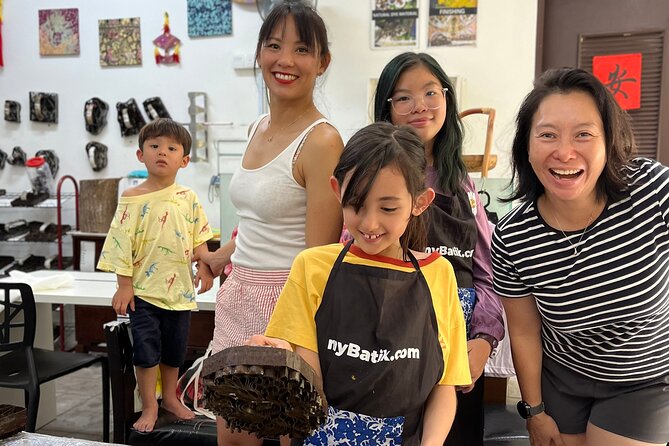
This is a private tour or activity, so only your group takes part. That arrangement can make a meaningful difference. You can ask questions without competing with a large crowd, and the pace may feel more comfortable for a family or small group.
Children below seven must be accompanied by an adult. The information also says most people can participate, which suggests the class is intended to be broadly accessible as a hands-on activity rather than a specialist art lesson.
Families should think about attention span. Ninety minutes is a reasonable length, but children who prefer quick activities may need help choosing a simple pattern. An adult can handle the more delicate parts or work alongside the child, while still allowing the child to choose colors and contribute to the design.
The class also suits couples, friends, and solo visitors who want a break from museums and city sights. I would choose it for a rainy Kuala Lumpur morning, a slower afternoon, or a day when you want to bring home something more personal than another photograph.
A service animal is allowed, and the center is near public transportation. Those points make the activity easier to plan, though the exact transport route is not provided. Since the class is by appointment only, confirm the meeting details before setting out.
A few more Kuala Lumpur days worth comparing
- Kuala Lumpur: Batu Caves Half-Day Tour with Pick-Up Option
★ 4.5 · 4,288 reviews - Private Half-Day Batu Caves and Cutural Tour in Kuala Lumpur
★ 5.0 · 3,107 reviews - Sambal Streets Kuala Lumpur Food Tour with 15+ Tastings
★ 5.0 · 2,438 reviews - Historical Malacca Guided Day Tour (Shared Tour)
★ 5.0 · 2,172 reviews
Finding the center in Ampang Jaya
The meeting point is:
myBatik
51, Embun Kemensah
Jalan Tiara Kemensah 3
68000 Ampang Jaya, Selangor, Malaysia
The center is described as a short distance from the Kuala Lumpur Twin Towers and downtown attractions, with a range of transport options nearby. Still, the full address places it in Ampang Jaya, so do not treat this as a workshop inside the main Twin Towers area.
That distinction matters when planning your day. If you are staying in central Kuala Lumpur, allow time to reach the center and check your route before the 10:30 a.m. start. The meeting point is also the end point, so you will return to the same place after the class.
One confusing detail deserves attention. The published stop information names Zoo Negara as Stop 1, but the activity description directs you to myBatik and does not describe a zoo visit. I would treat the art center as the actual destination and confirm the meeting instructions with the provider, TMS Art Marketing Sdn Bhd, before arrival.
This is not a reason to reject the workshop. It is simply the kind of small planning issue that can cause avoidable stress if you assume the zoo is part of the day.
What happens during the 90 minutes
The workshop follows a clear sequence, even though the exact time spent on each stage can vary.
Starting with a blank bag
You begin with the undyed cotton bag. This gives you a clean surface and makes the transformation easy to see.
The instructor explains the basics of batik painting and demonstrates the equipment. The workshop includes the materials, apron, and gloves, so you can get started without preparation.
Creating the wax pattern
Next, you use wax to create the design. The wax marks the areas that should resist the paint or dye.
This stage rewards patience. Your pattern does not need to be perfect, but the wax lines guide the colors and help define the final result. A simple design can look intentional and polished, while too many tiny details may be difficult to complete in the available time.
Adding and mixing color
You select colors and fill the sections of the bag. You can use prepared colors or mix primary colors into new shades.
This is where the project becomes personal. One person may choose traditional-looking colors and forms, while another may make a bright modern design. The class appears to support both approaches rather than forcing every participant to copy one example.
Removing the wax
After painting, the wax is removed. The design then becomes easier to read, with the resistant lines showing how the pattern was built.
This final stage gives the experience its strongest sense of completion. You leave with a bag that records the entire process, including your decisions and small imperfections.
Green Tomato Cafe and the batik gallery
After the workshop, you can access a nearby garden café and batik gallery within the myBatik center. Green Tomato Cafe serves all-day breakfast, lunch, and snacks.
Food and drinks are not included in the workshop price, so plan to pay separately if you eat there. The café is useful if you want to extend the visit instead of rushing straight back into Kuala Lumpur.
The gallery adds context to the class. After working on a small bag, you can look at batik in a more finished form and compare your beginner project with professional work. The provided details do not specify the gallery size or collection, so I would view it as an optional extra rather than the main reason to book.
The combination of workshop, café, and gallery makes the center more than a 90-minute appointment. You can keep the visit short, or make it a relaxed half-day outing by adding food and time to browse.
Is the $42 price fair?
At $42 per person, this is not the cheapest craft activity you could find in Kuala Lumpur. The value comes from what the fee includes and from the private format.
Your price covers all workshop materials, the batik demonstration, the activity itself, an apron, rubber gloves, a workshop certificate, local taxes, and the finished cotton bag. You also receive instruction rather than simply being handed supplies.
The bag gives the price a tangible return, but the more important value is the process. You get a guided introduction to a Malaysian art form and enough time to make something yourself. If you already plan to buy a batik souvenir, this class can replace a basic shopping stop with a more memorable activity.
The price may feel less attractive if you only want a quick painting session or if you are not interested in making a fabric item. Food, drinks, and transportation are extra, so include those costs in your day’s budget.
I see the best value for families, small private groups, and visitors who care about cultural activities. A solo visitor may also find it worthwhile, especially if the certificate and handmade bag appeal to you. For someone counting every ringgit, the workshop is a nice experience but not an essential Kuala Lumpur sight.
Booking timing, transport, and cancellation
The experience is booked, on average, 13 days ahead. That does not guarantee that every date fills early, but it is a good reason to reserve before your Kuala Lumpur visit if the timing matters.
The activity is mobile-ticket friendly, and confirmation is received when you book. The class is by appointment only, so do not arrive without a confirmed booking.
Free cancellation is available up to 24 hours before the start time for a full refund. Changes or cancellations made less than 24 hours before the experience are not accepted for a refund. The cut-off follows local time.
The stated start time is 10:30 a.m., although classes are offered throughout the day. Ask for the confirmed time shown on your booking, especially if you are arranging transport from central Kuala Lumpur.
Who should book the myBatik bag workshop?
I would recommend this experience to:
- Families looking for a calm, creative activity
- Visitors who want to learn about Malaysian culture by making something
- Couples or friends who enjoy hands-on classes
- Shoppers who prefer a personal souvenir to a mass-produced item
- People with a free morning or afternoon near Ampang Jaya
- Anyone curious about wax-resist fabric painting
I would hesitate to recommend it if you dislike crafts, have no interest in taking home a bag, or want a sightseeing tour with several major attractions. This is a focused workshop, not a broad Kuala Lumpur city tour.
The 5 out of 5 rating from 35 ratings and 100 percent recommendation fit the strongest parts of the experience: the pleasant learning process, the good equipment, and the satisfaction of understanding how batik decoration works. The workshop has earned praise for making participants feel they learned the craft rather than merely watching it.
Should you book it?
Book the myBatik workshop if you want a hands-on Malaysian cultural experience and like the idea of leaving with a useful handmade souvenir. The private setting, included materials, family-friendly format, café, and gallery make it a well-rounded stop.
Before paying, confirm the exact meeting details because the address is in Ampang Jaya and the published stop reference to Zoo Negara is unclear. If you are happy to make your own transport plans and spend 90 minutes on one craft, the $42 fee is reasonable for the instruction, supplies, certificate, and finished calico bag.
FAQ
How long does the batik bag workshop last?
The workshop lasts approximately 90 minutes.
Where does the workshop take place?
It takes place at myBatik, 51, Embun Kemensah, Jalan Tiara Kemensah 3, 68000 Ampang Jaya, Selangor, Malaysia.
What time does the workshop start?
The stated start time is 10:30 a.m. Classes are also offered throughout the day, and the activity is by appointment only.
What will I make during the class?
You will paint a 100 percent calico cotton bag measuring about 13 inches, or 34 centimeters, across.
Are workshop materials included?
Yes. The fee includes the materials needed for the class, an apron, rubber gloves, a batik demonstration, a workshop certificate, and local taxes.
Can I take the finished bag home?
Yes. The cotton bag you create is intended to be taken home after the workshop.
Is the activity suitable for children?
Yes. It is described as family-friendly. Children below seven must be accompanied by an adult.
Is the activity private?
Yes. Only your group will participate in the private activity.
Are food and drinks included?
No. Food and drinks are not included. All-day breakfast, lunch, and snacks are available separately at Green Tomato Cafe inside the myBatik center.
What is the cancellation policy?
You can cancel at least 24 hours before the local start time for a full refund. Cancellations or changes made less than 24 hours before the start time are not accepted for a refund.
Just added in Kuala Lumpur
- Explore Kuala Lumpur: Iconic City Landmarks & Batu Caves★ 5.0 · 15 reviews
- Private Hire Taxi Driver Port Klang Cruise Terminal To KL Tour★ 5.0 · 1 review
- Batu Caves And Putrajaya Cruise Excursion Tour From Port Klang★ 5.0 · 1 review
- AVANI Sepang Goldcoast Resort Hotel TO Kuala Lumpur Hotel Door to Door Transfer★ 4.5 · 3 reviews
- Airport Layover: Kuala Lumpur Full-Day Tour★ 4.0 · 1 review
- Kuala Lumpur Airport Transfer★ 5.0 · 29 reviews
- Transfer To Avani Sepang Goldcoast Resort★ 5.0 · 2 reviews
- Airport Layover Tour: Kuala Lumpur Full-Day★ 4.5 · 6 reviews
Batik Workshops, compared.

Batu Caves & Malaysian Handicraft Tour: Pewter & Batik Experience
Read our review →
Batu Caves and Sari Experience with Batik Workshop
Read our review →
Batu Cave & Royal Selangor Pewter and Batik Visit
Read our review →
Batu Caves, Royal Selangor Pewter and Batik Factory Tour
Read our review →
Batu Caves, Waterfalls, Hotspring, Batik & Pewter Tour with Lunch
Read our review →
Cultural Malaysia: Batu Caves, Batik and Pewter Luxury Tour
Read our review →Browse the lists this tour appears in