
Reviewed · BATIK WORKSHOPS
Batik Coloring Workshop by myBatik
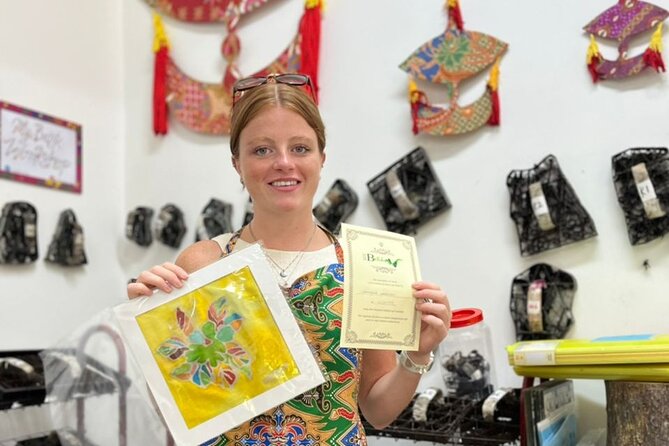
Wax, color, and take home a little Malaysia. This hands-on myBatik workshop gives you a simple introduction to a traditional Malaysian art, with all tools and materials included. I like the personal scale of the activity, since only your group takes part, and I like that you leave with a small painted cloth rather than just a few photos.
The class is family-friendly, runs during the day, and costs about $16 per person, which is fair for an activity that includes instruction, supplies, and a finished souvenir. My main caution is timing: the activity is described as lasting 30 to 45 minutes, while the center also describes learning about batik within two hours, so confirm how much time you should allow if you want to visit the café and gallery too.
In This Review
- Key points to know before you book
- A short creative stop near Kuala Lumpur
- Arriving at Embun or Emery in Ampang
- Choosing your pattern and learning the wax-resist method
- Painting with prepared and mixed colors
- What the 30 to 45 minutes really gives you
- A private class for families and small groups
- The garden café, gallery, and gift shop
- Is $16 good value?
- Best times to schedule your visit
- Who will enjoy this batik workshop most
- Should you book myBatik?
- FAQ
- How long does the batik workshop last?
- How much does the workshop cost?
- What will I paint?
- Can children take part?
- What are the opening hours?
- Is transportation included?
- Can I buy food or drinks there?
- Can I cancel for a full refund?
Key points to know before you book
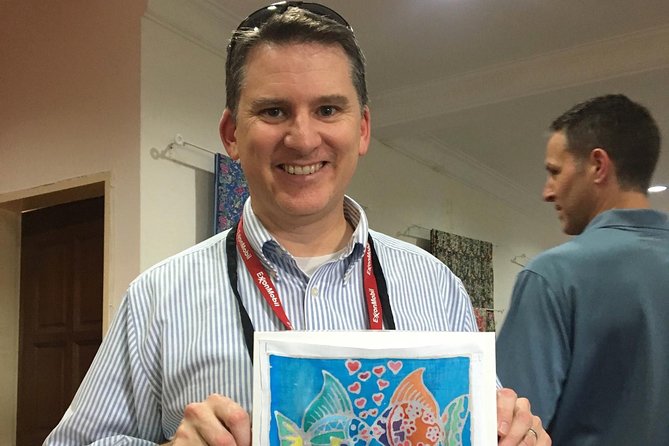
- You paint a 20-centimeter square of pre-waxed fabric, choosing from prepared designs before adding your own colors.
- The workshop uses Malaysian wax-resist batik, a centuries-old Southeast Asian method with distinctive local patterns and color choices.
- Your group has the activity to itself, making it easier to ask questions and work at your own pace.
- Artist Emilia is praised for her patience and warmth, as well as for helping with photos and videos during the session.
- The center opens from 8 a.m. to 3 p.m. daily, including public holidays, with a 1 p.m. last call for the workshop.
- A café, garden area, and batik gallery are nearby, but food, drinks, and transportation are not included.
A short creative stop near Kuala Lumpur
Batik is one of the better ways to connect with Malaysian culture because you do not just look at the finished product. You take part in one small stage of making it.
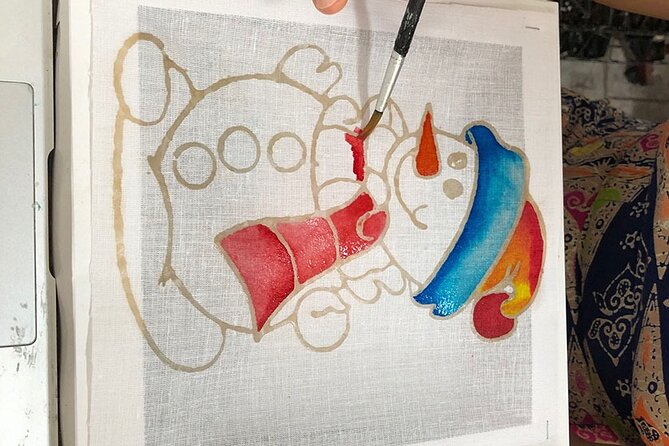
At myBatik, you begin with a square of undyed fabric that already has wax applied to it. The wax outlines the design and creates barriers that help keep your colors in their chosen spaces. This saves time and makes the workshop workable for beginners, children, and anyone who does not have much experience with art.
The result is not a full-length piece of clothing or a large wall hanging. It is a square cloth measuring about 7.8 inches, or 20 centimeters, across. That is small enough to complete during a short class and easy to pack in your luggage.
I see this as a good activity for a free morning or afternoon in Kuala Lumpur. It gives you something active to do without taking up half a day, though you can allow more time at the center if you want coffee, food, shopping, or a look around the gallery.
More batik workshops in Kuala Lumpur:
- Batu Caves & Malaysian Handicraft Tour: Pewter & Batik Experience
★ 4.5 · 316 reviews - Batu Caves and Sari Experience with Batik Workshop
★ 5.0 · 181 reviews - Malaysian Batik Experience-Handkerchief
★ 5.0 · 37 reviews
Arriving at Embun or Emery in Ampang
The meeting point is Embun or Emery at Kemensah, Jalan Tiara Kemensah 3, 68000 Ampang, Selangor. The center is described as a short distance from the Kuala Lumpur Twin Towers, downtown sights, and public transportation.
That location makes the workshop easy to pair with other plans, but do not treat it as a class inside the city center itself. Check your route carefully before setting out, especially if you are planning to reach another attraction at a fixed time afterward. Transportation to and from the center is not part of the $16 price.
The place also includes a handmade gift shop with a broad selection of batik products. If you enjoy the class, this is a useful chance to see what more finished Malaysian batik looks like and perhaps buy a larger piece than the one you paint yourself.
The café offers coffee, tea, all-day breakfast, lunch, and afternoon tea. These are separate purchases, so budget for them if you plan to turn the workshop into a longer stop.
Choosing your pattern and learning the wax-resist method
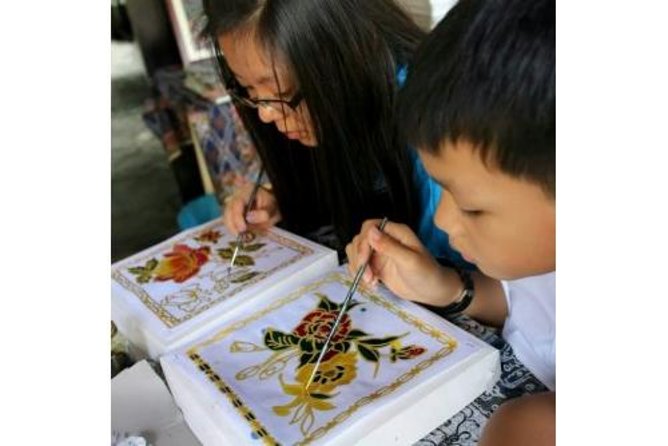
The workshop begins with a choice of designs. Your fabric is already prepared with wax, so you do not need to draw a pattern or handle hot wax yourself during this short class.
That preparation is important. Traditional batik uses wax-resist dyeing, a method practiced across Southeast Asia for hundreds of years. The wax acts as a barrier, allowing sections of cloth to remain separate as you apply color.
You get an accessible version of the process rather than a full professional course. That is not a weakness for most people. You can focus on color, brush control, and the pleasure of making something with your hands instead of worrying about every technical stage.
The prepared patterns also make the activity suitable for children aged seven and above. Children must be accompanied by an adult, and adults may find it helpful to choose a design that matches the child’s patience and comfort with small areas.
Painting with prepared and mixed colors
Once you have selected your design, you choose the colors to fill it. You can use the available colors as they are, or practice mixing primary colors to create custom secondary shades.
This is one of the nicest parts of the class. You are not simply filling in a coloring-book pattern with fixed choices. You get a small lesson in how colors change when combined, and you can make the finished cloth feel more personal.
I would take a moment before painting to decide on a general color plan. A small cloth can become visually crowded if every section uses a different strong color. On the other hand, a simple palette may make the pattern easier to read. The instructor can help you understand the basic process, but the final choices are yours.
The review information highlights Emilia as an especially patient and friendly artist. She is also praised for taking photos and videos, which is useful because your hands may be busy throughout the activity. If Emilia is leading your session, you can expect a warm teaching style based on that feedback, though staff availability can change.
A few more Kuala Lumpur days worth comparing
- Kuala Lumpur: Batu Caves Half-Day Tour with Pick-Up Option
★ 4.5 · 4,288 reviews - Private Half-Day Batu Caves and Cutural Tour in Kuala Lumpur
★ 5.0 · 3,107 reviews - Sambal Streets Kuala Lumpur Food Tour with 15+ Tastings
★ 5.0 · 2,438 reviews - Historical Malacca Guided Day Tour (Shared Tour)
★ 5.0 · 2,172 reviews
What the 30 to 45 minutes really gives you
The main workshop is described in several ways as approximately 30 to 40 minutes, 45 minutes, or one hour. The center also says you can learn about batik making within two hours. These descriptions appear to cover different amounts of time at the site.
For planning purposes, I would treat the painting itself as a short 30 to 45-minute activity. Allow extra time if you want to browse the shop, visit the gallery, sit in the garden café, or ask more questions about batik making.
This is not the right choice if you want a long, technical art course with every stage completed from raw cloth to finished dyeing. It is a compact introduction. You begin with pre-waxed fabric and focus on adding color, which keeps the experience manageable and leaves you with a completed piece.
The short length is also a benefit. You can fit it between sightseeing stops, and younger children are less likely to lose interest. Adults who want a relaxed craft activity rather than another guided walk will appreciate the change of pace.
A private class for families and small groups
Only your group participates in this private activity. That gives the session a more personal feel than a large class and should make it easier to ask for help when you are unsure how to handle a section of the pattern.
The format also works well for mixed-age groups. One person can experiment with color mixing while another follows the design more carefully. Since the finished cloth is small, you do not need advanced drawing or painting skills to complete it.
Children aged seven and above can take part when accompanied by an adult. Service animals are allowed, and most people can participate. The activity is near public transportation, but the supplied details do not specify the exact route or journey time, so you should check that separately.
A private format can sometimes cost more than a large group class. Here, the price of about $16 per person remains reasonable because it covers all related tools and materials, with no extra workshop fee listed. You are paying for a guided creative session and a physical item to take away.
The garden café, gallery, and gift shop
The workshop does not have to end when your paintbrushes are put down. The center has a nearby garden café where you can order coffee, tea, breakfast, lunch, or afternoon tea.
Food and drinks are not included, so think of the café as an optional extension rather than part of the paid class. It can be useful if you want to sit and let the experience settle, especially if you are visiting with children or have built a longer break into your schedule.
The batik gallery gives you a chance to compare your small painted cloth with more finished examples. You may notice how pattern, color, and wax technique work together on larger pieces. The gift shop sells handmade batik products, making it a practical place to look for a Malaysian gift.
I like this combination because the workshop provides the personal souvenir, while the gallery and shop show the wider craft. You get both the activity and some context, without needing a separate museum visit.
Is $16 good value?
At about $16 per person, the workshop is priced as an affordable cultural activity rather than a major tour. The fee includes all materials, tools, and local taxes, so you should not face a separate charge for the basic painting session.
The souvenir adds real value. A 20-centimeter cloth will not replace a carefully made batik garment, but it carries your own color choices and marks. That makes it more meaningful than a generic shop purchase, especially if you are looking for something small and easy to pack.
The price looks strongest for families, couples, and small private groups who want a short activity near Kuala Lumpur. It is less compelling for someone who already has substantial experience with batik and wants advanced instruction.
Remember to add the cost of transportation and anything you order at the café. The center accepts cash and credit cards, including Visa, Mastercard, and American Express, for purchases at the site.
Best times to schedule your visit
myBatik is open from 8 a.m. to 3 p.m. every day, including public holidays. The last call for the workshop is 1 p.m., so an early or midday booking gives you the most flexibility.
Morning may suit families who want to start with a creative activity before the heat of the day builds. An afternoon visit works if you are already in the Ampang area, but do not arrive too late because the workshop cannot begin after the stated last call.
The center accepts mobile tickets, and confirmation is provided when you book. Keep the booking details easy to access on your phone, particularly if you are arranging the activity as part of a busy day.
Free cancellation is available up to 24 hours before the local start time for a full refund. Cancellations or changes made less than 24 hours ahead are not accepted, so be careful with your schedule.
Who will enjoy this batik workshop most
I would recommend this experience to families with children aged seven and above, couples looking for a quiet creative break, and anyone who wants a handmade Kuala Lumpur souvenir.
It also suits people who like cultural activities that involve doing rather than simply watching. You learn the basic idea behind wax-resist batik, make color choices, and leave with a finished cloth.
You may want to choose another activity if you need a full technical course, a large finished artwork, or transportation included from your hotel. The workshop is short, and the fabric is prepared in advance. Those limits are exactly what make it easy and accessible, but they may disappoint experienced artists.
The strongest reason to book is the personal attention. A private group setting and the praised patience of Emilia can make the difference between a rushed craft session and an enjoyable introduction.
Should you book myBatik?
Book it if you want a low-cost, family-friendly cultural activity with a finished souvenir and the freedom to choose your own colors. The private format, flexible daytime hours, included supplies, café, gallery, and gift shop give you more to do than the painting alone.
I would allow at least an hour on site, and longer if you want food or shopping. Confirm the expected workshop length when booking, since the painting session is described as 30 to 45 minutes while the broader visit can take up to two hours.
For most visitors, this is a good-value creative stop in Kuala Lumpur. It will not teach every part of professional batik production, but it offers a friendly, practical taste of the craft without demanding a large block of your holiday.
FAQ
How long does the batik workshop last?
The painting activity is described as lasting approximately 30 to 40 minutes or 45 minutes. The center also describes learning about batik making within two hours, which may include time at the café, gallery, shop, and additional activities.
How much does the workshop cost?
The listed price is $16 per person. All workshop materials, tools, and local taxes are included.
What will I paint?
You will paint a square piece of fabric measuring about 7.8 inches, or 20 centimeters, across. The fabric is undyed and already prepared with a waxed pattern.
Can children take part?
Yes. Children aged seven and above can participate, but they must be accompanied by an adult.
What are the opening hours?
The center is open from 8 a.m. to 3 p.m. every day, including public holidays. The last call for the workshop is 1 p.m.
Is transportation included?
No. Transportation to and from the attraction is not included. The center is near public transportation.
Can I buy food or drinks there?
Yes. The café offers coffee, tea, all-day breakfast, lunch, and afternoon tea. Food and drinks cost extra.
Can I cancel for a full refund?
Yes, if you cancel at least 24 hours before the experience start time. Cancellations or changes made less than 24 hours in advance are not accepted for a refund.
Just added in Kuala Lumpur
- Explore Kuala Lumpur: Iconic City Landmarks & Batu Caves★ 5.0 · 15 reviews
- AVANI Sepang Goldcoast Resort Hotel TO Kuala Lumpur Hotel Door to Door Transfer★ 4.5 · 3 reviews
- Private Hire Taxi Driver Port Klang Cruise Terminal To KL Tour★ 5.0 · 1 review
- Batu Caves And Putrajaya Cruise Excursion Tour From Port Klang★ 5.0 · 1 review
- Airport Layover: Kuala Lumpur Full-Day Tour★ 4.0 · 1 review
- Kuala Lumpur Airport Transfer★ 5.0 · 29 reviews
- Transfer To Avani Sepang Goldcoast Resort★ 5.0 · 2 reviews
- Airport Layover Tour: Kuala Lumpur Full-Day★ 4.5 · 6 reviews
Batik Workshops, compared.

Batu Caves & Malaysian Handicraft Tour: Pewter & Batik Experience
Read our review →
Batu Caves and Sari Experience with Batik Workshop
Read our review →
Batu Cave & Royal Selangor Pewter and Batik Visit
Read our review →
Batu Caves, Royal Selangor Pewter and Batik Factory Tour
Read our review →
Batu Caves, Waterfalls, Hotspring, Batik & Pewter Tour with Lunch
Read our review →
Cultural Malaysia: Batu Caves, Batik and Pewter Luxury Tour
Read our review →Browse the lists this tour appears in