
Reviewed · FOOD TOURS IN KUALA LUMPUR
Kuala Lumpur Food Tour with 12+ Authentic Dishes & Local Secrets
Kuala Lumpur tastes best one small plate at a time. This three-hour walking tour links old-town cafés, hawker stalls, bakeries, temples, and market lanes while serving more than 12 Malaysian dishes. I like the wide mix of Malay, Chinese, and Indian food, and I like that guides such as Azreena and Ferija add stories about how recipes changed with local ingredients. The main consideration is the pace: you will walk quite a bit, and the menu or route can change with weather and vendor availability.
At $54 per person, the tour asks a fair price for a meal-sized series of tastings plus a guided walk through central Kuala Lumpur. I especially like the chance to try assam laksa, roti canai, kaya bread, cendol, and local drinks in one outing. Still, anyone with dietary needs should contact the operator before booking, since the food stops need advance planning.
In This Review
- Five things to know before you book
- Why this Kuala Lumpur food tour works
- Starting with kaya bread and nasi lemak
- Lorong Panggung and the old Chinatown lanes
- Petaling Street: stalls, bakeries, and tea shops
- Temples beside southern Indian and Malay food
- Central Market and the sweeter side of KL
- The River of Life and Kuala Lumpur’s colonial centre
- Ending near Merdeka Square
- What you actually eat and drink
- Guide quality and the human side of the tour
- Is $54 good value?
- Who should book this food walk?
- Should you book the Kuala Lumpur food tour?
- FAQ
- How long does the Kuala Lumpur food tour last?
- Where does the tour start?
- Where does the tour end?
- How much food is included?
- How large is the group?
- Can I cancel for a full refund?
Five things to know before you book
- More than 12 tastings in three hours: Expect a steady stream of savory dishes, sweets, fruit, coffee, tea, and one secret dish.
- A three-cuisine food lesson: Malay, Chinese, and Indian influences appear in the food, temples, shops, and street scenes.
- Small group of up to 12 people: The group size should make it easier to hear the guide and watch food being prepared.
- A walking route through old Kuala Lumpur: Petaling Street, Lorong Panggung, Central Market, the River of Life, and nearby heritage streets all feature.
- A meal for people who like variety: You can sample many specialties, but you may not get a large serving of any one dish.
- Plan for weather and comfortable shoes: Poor weather can lead to a rescheduled tour or refund, and the route involves a fair amount of walking.
Why this Kuala Lumpur food tour works
Kuala Lumpur is a meeting point for food traditions. Malay cooking brings coconut, sambal, fragrant rice, and spice. Indian communities have shaped breads, curries, and banana leaf meals. Chinese settlers contributed noodles, buns, tea traditions, and wok cooking. Colonial influence adds another layer to the city’s cafés and baked goods.
This tour gives you a useful introduction to that mix without asking you to spend days finding each stop yourself. The food is the main attraction, but the route gives each dish a setting. You pass temple streets, colonial shopfronts, old markets, and back lanes while the guide explains how food and migration shaped the city.
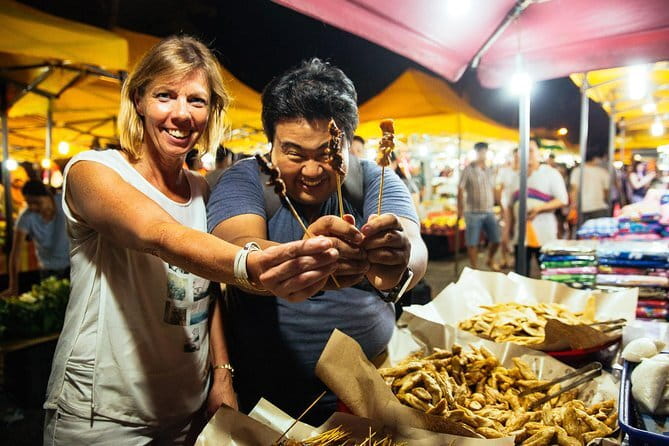
The small group matters. With a maximum of 12 people, you should have a better chance of seeing a vendor prepare a dish and asking questions without shouting across a large crowd. The experience is still a group tour, though, so the pace and menu are shared rather than customized around one person’s preferences.
More Food Tours in Kuala Lumpur
- Sambal Streets Kuala Lumpur Food Tour with 15+ Tastings
★ 5.0 · 2,438 reviews - Kuala Lumpur: Sambal Street Food Tour with 15+ Tastings
★ 4.9 · 1,657 reviews - The 10 Tastings of Kuala Lumpur With Locals: Private Street Food Tour
★ 5.0 · 249 reviews
Starting with kaya bread and nasi lemak
The meeting point is at the parking lot at 2 Jalan Balai Polis in Kuala Lumpur’s city centre. The first stop joins locals at popular old-town brunch spots for about 20 minutes.
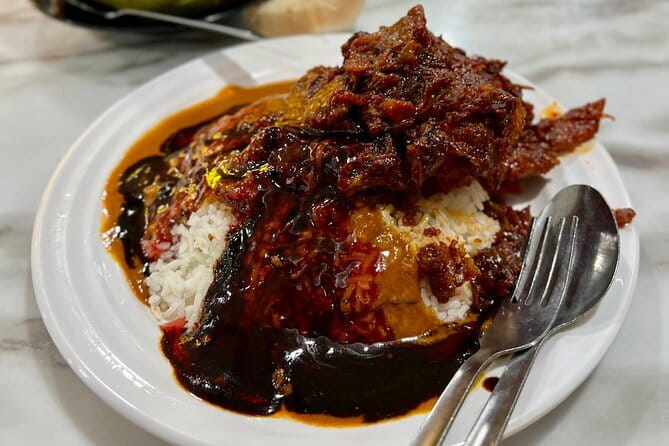
The opening bites include steamed kaya bread with sambal eggs and nasi lemak. Kaya is a sweet coconut and egg spread, while sambal eggs bring heat and savoriness. Nasi lemak, fragrant rice commonly served with spicy accompaniments, gives you an early taste of the Malay kitchen.
Starting with breakfast foods makes sense. It introduces the balance that runs through Malaysian cooking: sweet against spicy, creamy against sharp, and soft rice or bread alongside strongly seasoned sauces. I would arrive hungry, but not so hungry that you rush the first tasting. There is a lot more food ahead.
The exact café or stall can vary, so you should think of this as a food style rather than a guaranteed single restaurant experience. That flexibility helps the operator respond to availability, but it also means the day may not follow the same order every time.
Lorong Panggung and the old Chinatown lanes
The walk continues through Lorong Panggung, a lane known for colorful street art, old shopfronts, and food stalls. This part gives the tour some breathing room between tastings.
The setting matters because Kuala Lumpur’s food culture is not limited to restaurant interiors. Old shophouses, narrow lanes, and street vendors show how commerce and cooking have shared the same small spaces for generations. Your guide also uses the walk to point out details you could easily miss if you were simply heading from one restaurant to another.
You may find this section especially useful early in your visit. It helps you get your bearings in the old city centre and places the next food stops in context. The possible drawback is that a 20-minute stop is short, particularly if you want plenty of time for photographs.
Petaling Street: stalls, bakeries, and tea shops

At Petaling Street and nearby Chinatown, the tour meets local vendors at hawker stalls, bakeries, and traditional tea shops. This is one of the strongest parts of the route for people who want to see everyday food businesses rather than only polished dining rooms.
The menu here may include curry laksa, assam fish laksa, Malay pork buns, and local drinks. Curry laksa is creamy and spiced, while assam laksa takes a sharper, sourer direction with fish and tamarind-like flavor. One food stop can show how much Malaysian noodle soups differ from one another.
The Malay pork buns are another reminder that Kuala Lumpur food does not fit neatly into one category. The city’s cooking reflects several communities living and eating side by side. You may also sample local kopi, or coffee, and teh tarik, frothy pulled tea. The tea is prepared by pouring it between containers to create foam, and the drink is a good match for the stronger flavors on the route.
This part may be busy and active, and the timing is not built for leisurely browsing. If you want to shop through Petaling Street, save that for another visit. The tour is focused on tasting and moving on.
A completely different kind of day out:
- Kuala Lumpur: Batu Caves Half-Day Tour with Pick-Up Option
★ 4.5 · 4,288 reviews - Private Half-Day Batu Caves and Cutural Tour in Kuala Lumpur
★ 5.0 · 3,107 reviews - Historical Malacca Guided Day Tour (Shared Tour)
★ 5.0 · 2,172 reviews - From Kuala Lumpur: Batu Caves Cultural Temple Tour
★ 4.7 · 1,453 reviews
Temples beside southern Indian and Malay food
The next stops bring food and faith into the same short stretch of Jalan Tun H S Lee. At number 163, you visit Kuala Lumpur’s oldest Hindu temple before trying southern Indian and Malay cuisine.
That pairing is useful. You are not only eating a dish, you are seeing one of the cultural settings that helps explain the food’s place in the city. The tour then visits an historic Chinese temple at number 168, giving you another chance to connect the city’s religious traditions with its cooking.
The food list includes a selection of banana leaf curries, clam noodles, and roti canai with dipping curries. Banana leaf curry is served with rice and several accompaniments, so it offers variety even within one tasting. Roti canai is a flaky, pan-cooked bread eaten with curry. One past participant particularly enjoyed trying to make roti, even without perfect results, so you may get a hands-on moment if the stop and conditions allow it.
The wording around the menu matters. The food is subject to location availability and other circumstances, so no dish should be treated as absolutely guaranteed. If you have allergies, religious restrictions, or a vegetarian diet, contact the provider before the tour. A last-minute request may be hard to accommodate across several small food businesses.
Central Market and the sweeter side of KL
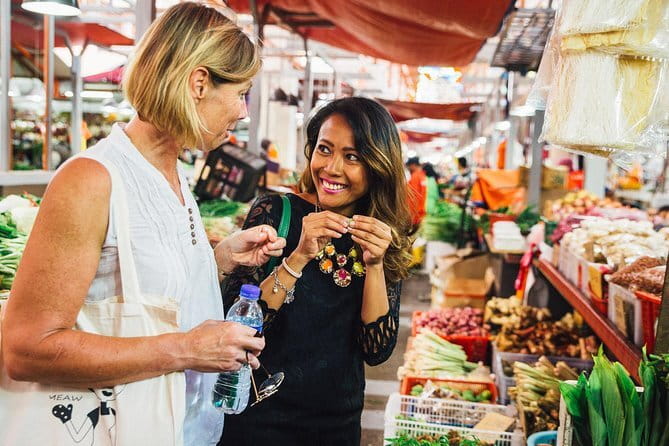
Central Market is the next major landmark. The market adds a change of rhythm after the temples and hawker stalls, and it gives the guide another setting for explaining Kuala Lumpur’s cultural mix.
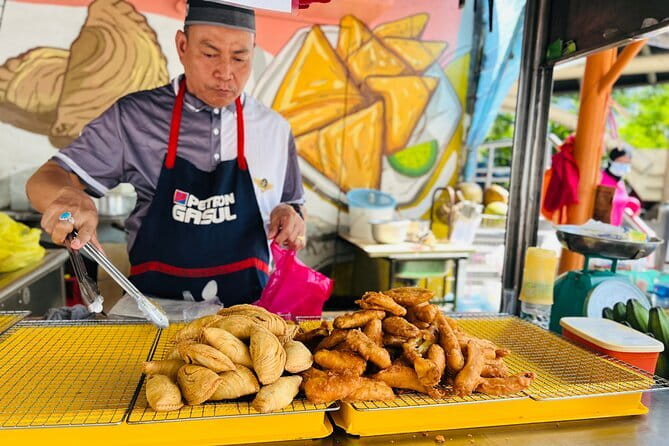
The sweet course is substantial. You may try fried banana, curry puff pastry, bamboo cakes, Apam Balik peanut pancake, custard tart, and ice cendol. These are not interchangeable desserts. Fried banana is simple and familiar, while curry puff pastry combines a crisp shell with a savory filling. Apam Balik is a folded peanut pancake, and cendol is a cold dessert with shaved ice and sweet toppings.
Bamboo cakes add another traditional item to the tasting list, though the precise selection can change. The mix should suit you if you like sampling rather than committing to one dessert. It also makes the tour feel like more than a noodle-and-curry crawl.
The large number of tastes can become a challenge. Twelve or more dishes in about three hours is generous, but it means small portions and a full stomach by the end. Pace yourself. You do not need to finish every bite immediately if you already know you want to save room for the later sweets.
The River of Life and Kuala Lumpur’s colonial centre
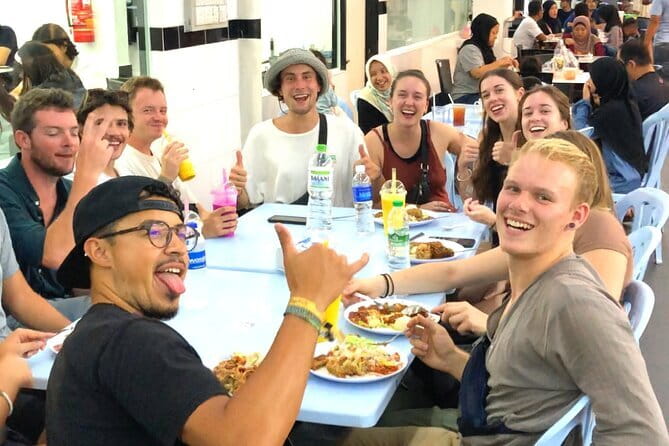
After Central Market, the route moves along Jalan Benteng toward the River of Life. This section focuses on Kuala Lumpur’s historic centre and colonial-era streets.
The walk gives you time to digest and lets the guide explain how the old city developed around trade, transport, and public buildings. Street art, temples, market lanes, and colonial shopfronts make the route more than a string of food counters. You get a short city orientation at the same time as lunch.
This is also where the tour’s walking requirement becomes clear. The individual stops are listed at about 20 minutes, but the full experience lasts roughly three hours, so walking time connects them. Comfortable shoes are not a suggestion to ignore. Heat, humidity, and uneven city walking can make a food tour feel harder than the distance looks on paper.
The River of Life stop may appeal to people who want photographs and city views, but it is not a long sightseeing visit. The food remains the purpose of the tour, and the guide has to keep the group moving.
Ending near Merdeka Square
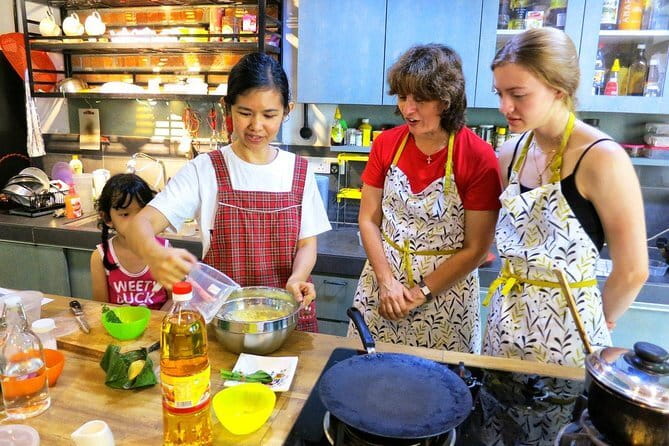
The final heritage walk follows Jalan Tun Perak and finishes close to Merdeka Square and the Sultan Abdul Mosque, before returning to the original meeting point.
This is a fitting end because it places the final food tastings near some of central Kuala Lumpur’s best-known civic and religious landmarks. You may finish with ice cendol, custard tart, a refreshing iced lemon drink, or another sweet item depending on the day’s route.
The return to the starting point makes planning easier. You do not need to arrange a separate pickup after the tour, but hotel pickup and drop-off are not included. Since the activity ends back at the meeting point, check your onward plans before booking a tight connection or timed attraction.
What you actually eat and drink
The menu covers a lot of ground:
- Steamed kaya bread with sambal eggs
- Nasi lemak
- Curry laksa
- Assam fish laksa
- Roti canai with dipping curries
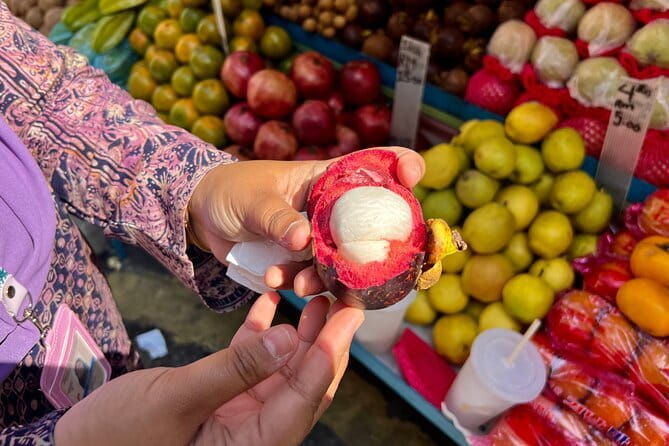
- Exotic fruits
- Malay pork buns
- Banana leaf curries
- Clam noodles
- Fried banana
- Curry puff pastry
- Bamboo cakes
- Apam Balik peanut pancake
- Custard tart
- Ice cendol
- A secret dish
- Teh tarik
- Local kopi
- Iced lemon
That is more than 12 tasting opportunities, even allowing for changes. I like the range because it prevents the usual food tour problem of eating the same style of dish six times. You get rice, noodles, bread, curry, seafood, fruit, pastries, and chilled dessert.
The secret dish adds a small surprise, but you should not book this expecting a precise restaurant menu. The operator can change dishes and stops according to weather, supply, and location availability.
Guide quality and the human side of the tour
The guide can make or break a food walk. Here, Azreena is praised for explaining both the food and the inner city, including how recipes adapted to local ingredients. Ferija is also associated with a playful roti-making moment and a well-paced tour.
Those details suggest the strongest part of the experience is not only what you eat. It is the explanation around each taste. A dish becomes easier to remember when you understand the community, cooking method, or trade connection behind it.
The tour is especially useful for a first visit to Kuala Lumpur. You can ask which foods to seek out later, learn the names of dishes before ordering alone, and get a practical sense of the old city centre. If you already know Malaysian food well, the appeal is more about the route, local stories, and small vendors than about discovering every dish for the first time.
Is $54 good value?
At $54 per person, this is not the cheapest way to eat in Kuala Lumpur. Local hawker meals can cost much less when bought one by one. You are paying for the guide, planning, multiple tastings, drinks, city interpretation, and the convenience of having the food stops arranged.
For three hours and more than 12 items, the price is reasonable if you value variety and guidance. It is less compelling if your main goal is simply to eat the largest possible meal for the lowest cost. Group discounts may improve the value for families or friends booking together.
The maximum group size is 12, which is a useful middle ground. You get company and a social feel without the scale of a large coach excursion. The experience is booked an average of 26 days ahead, so I would not leave it until the last minute during a busy Kuala Lumpur visit.
Who should book this food walk?
I would recommend it to first-time visitors, curious eaters, couples, small groups, and anyone who wants a food introduction tied to the city’s older streets. It also suits people who prefer tasting several dishes instead of sitting down for one long meal.
You should think twice if you dislike walking, spicy food, shared tasting formats, or changing menus. The operator says most people can participate, but the route involves a fair amount of walking and the food businesses may not be able to adjust every dish.
Book early if this is important to your schedule. Confirmation arrives within 48 hours, subject to availability. Free cancellation is available up to 24 hours before the start time. Within 24 hours, changes and refunds are not accepted, except that poor weather or failure to meet the minimum group size can lead to another date or a full refund.
Should you book the Kuala Lumpur food tour?
Yes, if you want a compact introduction to Kuala Lumpur’s food cultures and old city centre. The best reasons to book are the broad menu, the small group limit, and the chance to connect dishes with temples, markets, colonial streets, and local vendors.
I would choose it near the beginning of your stay, then use what you learn to guide later meals. Arrive hungry, wear comfortable shoes, tell the operator about dietary needs in advance, and allow room for route changes. If you prefer a slow restaurant meal or a strict menu, choose something else. If you want to taste your way through KL with a guide who adds useful local context, this $54 tour is a strong choice.
FAQ
How long does the Kuala Lumpur food tour last?
The experience lasts approximately three hours.
Where does the tour start?
It starts at the parking lot at 2 Jalan Balai Polis, City Centre, 50000 Kuala Lumpur, Malaysia.
Where does the tour end?
The tour ends back at the original meeting point.
How much food is included?
The tour includes more than 12 dishes and tasting items, along with drinks such as teh tarik, local kopi, and iced lemon. The menu can change based on availability, weather, and other circumstances.
How large is the group?
The maximum group size is 12 people.
Can I cancel for a full refund?
Yes. You must cancel at least 24 hours before the experience start time for a full refund. Cancellations or changes made within 24 hours are not refunded or accepted.
Just added in Kuala Lumpur
- Explore Kuala Lumpur: Iconic City Landmarks & Batu Caves★ 5.0 · 15 reviews
- Private Hire Taxi Driver Port Klang Cruise Terminal To KL Tour★ 5.0 · 1 review
- Batu Caves And Putrajaya Cruise Excursion Tour From Port Klang★ 5.0 · 1 review
- AVANI Sepang Goldcoast Resort Hotel TO Kuala Lumpur Hotel Door to Door Transfer★ 4.5 · 3 reviews
- Airport Layover: Kuala Lumpur Full-Day Tour★ 4.0 · 1 review
- Kuala Lumpur Airport Transfer★ 5.0 · 29 reviews
- Transfer To Avani Sepang Goldcoast Resort★ 5.0 · 2 reviews
- Airport Layover Tour: Kuala Lumpur Full-Day★ 4.5 · 6 reviews
Food Tours in Kuala Lumpur, compared.
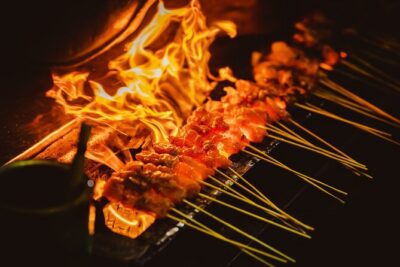
Sambal Streets Kuala Lumpur Food Tour with 15+ Tastings
Read our review →
The 10 Tastings of Kuala Lumpur With Locals: Private Street Food Tour
Read our review →
Kuala Lumpur Local Street Food Private Walking Tour by Night
Read our review →
Eat Like a Local: Kuala Lumpur Hawker Center and Street Food Tour by Night
Read our review →
Laksa Lanes Kuala Lumpur Food Tour with 14+ Tastings
Read our review →
Browse the lists this tour appears in